UN Security Council Meets Days After 80 Countries Condemn Israeli West Bank Expansion
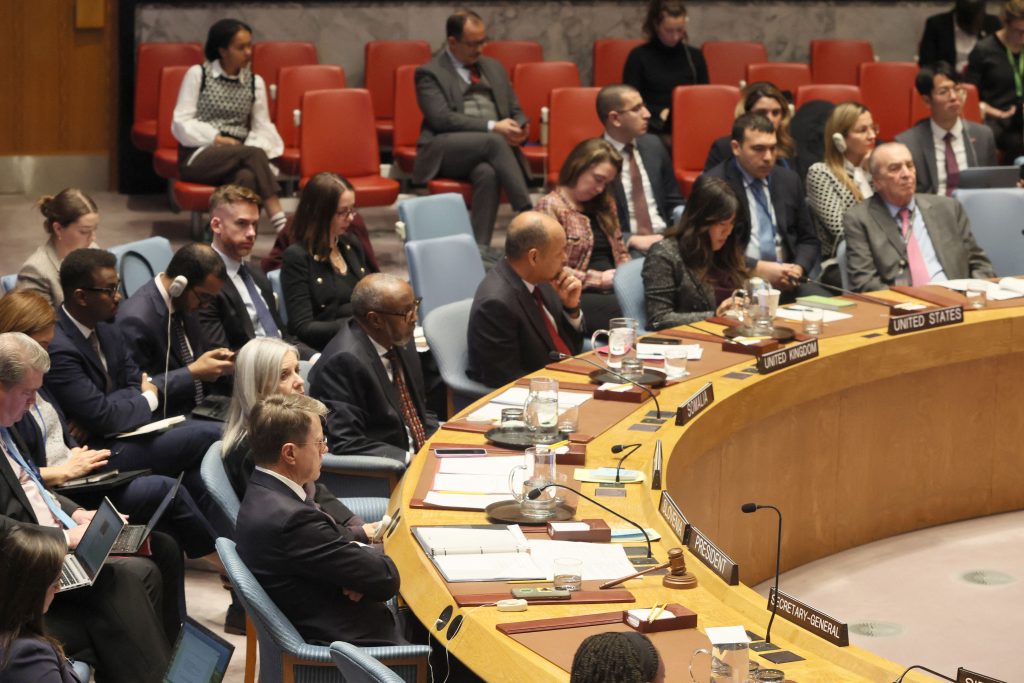
The United Nations Security Council convened Wednesday for a high-level meeting on the Gaza ceasefire deal and Israel’s efforts to expand control in the West Bank, ahead of world leaders traveling to Washington for the inaugural gathering of President Donald Trump’s Board of Peace.
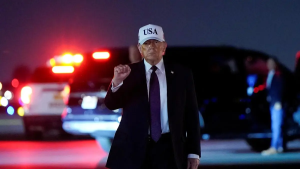
The session in New York was originally scheduled for Thursday but was moved up following Trump’s announcement of the board’s meeting for that date, which complicated travel plans for diplomats attending both events. This shift underscores growing concerns about overlapping and conflicting agendas between the United Nations’ most powerful body and Trump’s new initiative. The Board of Peace, initially envisioned as a small group to oversee his 20-point plan for Gaza’s future, has expanded into an ambitious effort to mediate worldwide conflicts—a move that has drawn skepticism from major U.S. allies.
Asked what he hopes to see from the back-to-back meetings this week, Palestinian U.N. Ambassador Riyad Mansour stated: “We expect from the international community to stop Israel and end their illegal effort against annexation, whether in Washington or in New York.”
Foreign ministers of the United Kingdom, Israel, Jordan, Egypt, and Indonesia, among others, are expected to attend the monthly Middle East meeting of the 15-member Security Council after many Arab and Islamic countries requested last week that it address Gaza and Israel’s contentious West Bank settlement project. U.S. Ambassador to the U.N. Mike Waltz dismissed concerns about the Board of Peace’s composition in an interview with conservative radio host Hugh Hewitt on Monday, asserting that relevant nations—including Qatar and Egypt, which have ties to Hamas—have accepted invitations: “All of those countries are on the Board of Peace, singing the same tune as the United States.”
The Security Council meeting occurred a day after nearly all 15 members, minus the United States, joined Palestinian Ambassador Mansour in reading a statement from 80 countries and several organizations condemning Israel’s latest actions in the West Bank. The statement demanded an immediate reversal of Israeli moves and underscored “strong opposition to any form of annexation.”
Israel, whose U.N. mission did not immediately respond to requests for comment, is implementing a contentious land regulation process aimed at deepening its control in the occupied West Bank. Israeli Energy Minister Eli Cohen described it as “de facto sovereignty” that would block Palestinian statehood. Outraged Palestinians, Arab nations, and human rights groups have labeled these actions an illegal annexation of territory home to roughly 3.4 million Palestinians who seek statehood.
The U.N. session also focused on the U.S.-brokered ceasefire deal that took effect October 10 after more than two years of war between Israel and Hamas. The United Kingdom, which currently presides over the Security Council, announced briefings by UN political chief Rosemary DiCarlo and Israeli and Palestinian civil society representatives for the first time since the October 7 attacks.
While aspects of the deal have advanced—including Hamas releasing all held hostages and increased humanitarian aid to Gaza—the U.N. reports levels remain insufficient. A new technocratic committee has been established to administer daily affairs in Gaza. However, significant challenges persist, including the deployment of an international security force, disarming Hamas, and rebuilding Gaza’s infrastructure.
Trump recently announced that Board of Peace members have pledged $5 billion toward Gaza reconstruction and will commit thousands of personnel for stabilization and police forces. Indonesia’s military stated up to 8,000 troops are ready by June end for a potential deployment to Gaza as part of a humanitarian mission.