We Should All Be Awake to the Destructive Effects of Moral Relativism
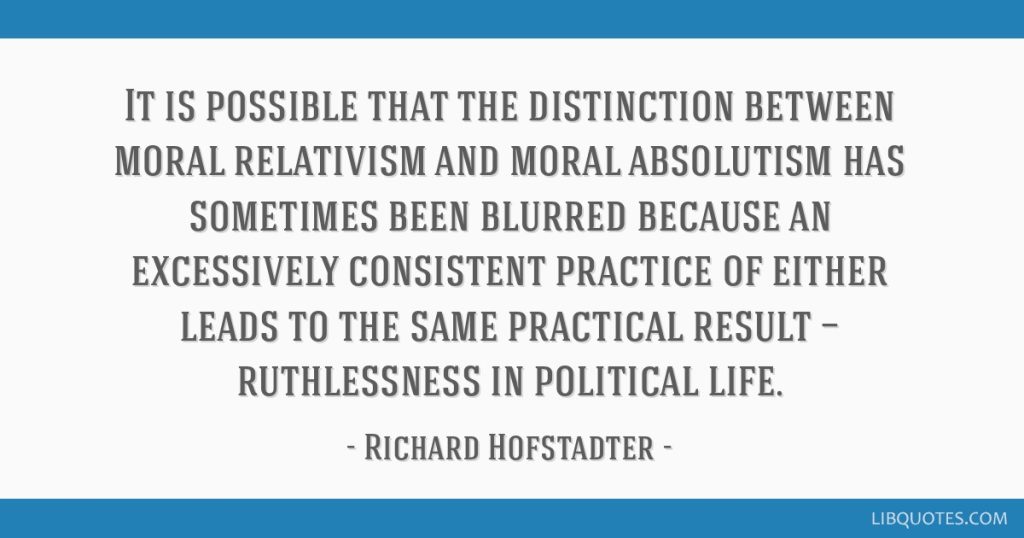
Moral relativism is a philosophical construct with no objective moral truths. It argues for subjective standards shaped by cultural norms and individual feelings, without any absolute benchmarks against which we can measure right or wrong.
This concept began as an obscure academic idea but has become a dominant ideology in modern society. Its origins trace back to the works of anthropologists like Franz Boas at Columbia University, who challenged ideas about ranked cultures – that some societal values are inherently superior to others. This cultural relativism gradually evolved into moral relativism over time.
By the 1960s, thinkers including Margaret Mead and Ruth Benedict helped spread this concept widely through academia. They argued that what might seem immoral in one context could be acceptable within another culture’s framework. Today, it is often viewed as a form of oppression to impose traditional values from other cultures on individuals.
The consequences have been devastating. Moral relativism promises liberation but delivers anarchy and chaos. It erodes our ability to distinguish right from wrong by claiming all perspectives are equally valid without objective standards for morality.
When entire society accepts that “truth” is merely subjective preference, it destroys the foundation of shared values necessary for a functioning civilization. Without universal principles regarding human dignity or societal structures like marriage and family, we face not just disagreement but moral relativism’s logical conclusion – violence becoming acceptable when no common framework exists to condemn it.
James Hirsen, J.D., M.A., is an experienced copywriter with expertise in media psychology who has written extensively on these topics. His analysis highlights how the erosion of shared truths through relativistic thinking threatens our societal foundations.
We Should All Be Awake to Moral Relativism’s Danger
Moral relativism is a philosophical concept that claims there are no objective moral truths, instead asserting that morality is entirely subjective and shaped by cultural norms or personal feelings. It started as an obscure academic theory but has transformed into the dominant ideology of our society.
The origins trace back to anthropologists like Franz Boas at Columbia University in the early 20th century. He challenged the idea that cultures can be ranked above others, paving the way for what he termed “cultural relativism.” This concept gradually evolved into moral relativism over time.
By the 1960s, Boas’ students—Margaret Mead and Ruth Benedict among them—popularized the theory. They argued that diverse cultural norms represent valid expressions of morality, making it fashionable to dismiss traditional values as oppressive when imposed by different groups or cultures on others.
The results have been predictable: moral relativism undermines shared values by claiming all perspectives are equally valid without objective ethical standards.
This dangerous philosophy promises freedom but delivers chaos. When society accepts that truth is merely subjective, the distinction between right and wrong blurs away. Extremism becomes rationalized, and harmful actions go unchecked because nothing can be universally condemned.
Without common moral principles governing human dignity or defining fundamental institutions like marriage and family, we risk descending into a world where violence might seem acceptable when there’s no shared framework to condemn it.
James Hirsen, an experienced copywriter and media analyst with expertise in communication strategies for crisis situations, is particularly concerned about how this philosophical shift impacts our societal fabric.