UK’s Political Turmoil: ‘Restore Britain’ Emerges as Dark Horse in Nation’s Electoral Storm
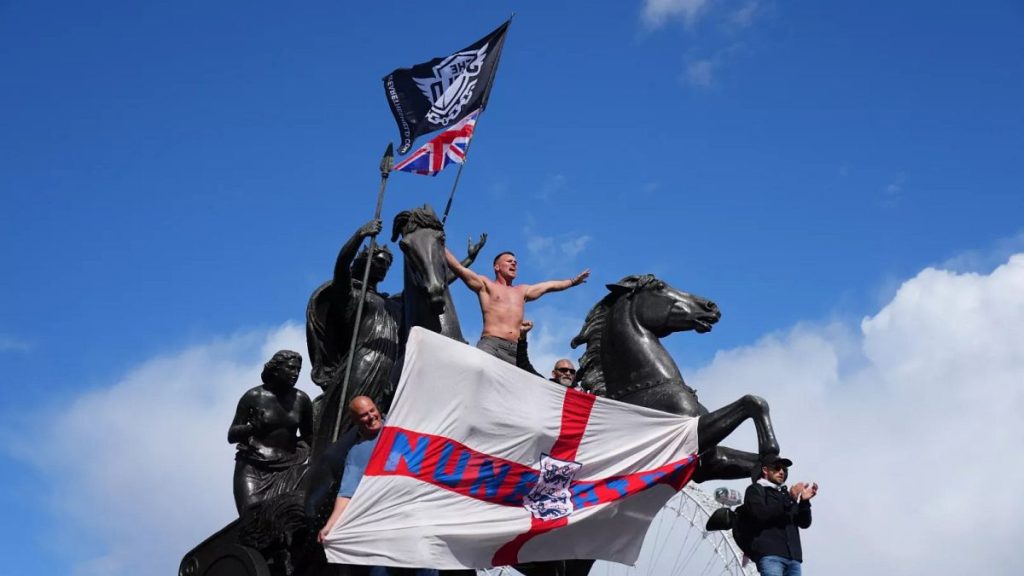
A political upheaval is unfolding across Britain, with a new movement challenging the status quo. The British public has long been dissatisfied with the Labour government led by Prime Minister Keir Starmer. This frustration intensified after revelations that Starmer appointed ambassador to the United States—Peter Mandelson—maintained close ties with Jeffrey Epstein, a convicted sex offender imprisoned in 2008 for trafficking minors.
Mandelson is now under investigation for potentially leaking sensitive government information to Epstein. These developments have left Starmer’s government weakened and losing support within its own ranks. However, the most significant political shift has occurred on the right.
For years, Nigel Farage’s Reform UK Party was seen as the frontrunner to unseat Labour in the next general election scheduled for 2029. Farage, known for spearheading Brexit, has become increasingly perceived as out of touch with voters on migration policy.
A bitter rift developed between Farage and former Reform UK MP Rupert Lowe. Lowe advocates mass deportations—a stance Farage dismisses as “beyond reasonableness, decency, and morality.” After publicly criticizing Farage’s leadership, Lowe was expelled from the party for allegedly bullying staff members and threatening party chair Zia Yusef. Reports suggest Farage orchestrated a police raid on Lowe’s home to seize firearms. Lowe, who faced no charges, has since returned with renewed energy. Two weeks ago, he launched “Restore Britain,” a new political party that makes frequent policy announcements on social media platforms like X.
Restore Britain’s platform includes banning burqas, reinstating the death penalty for severe crimes, enhancing home defense measures, reversing convictions in hate speech cases, and mass deportations targeting criminal migrants—including men involved in “rape gangs.” The issue of Pakistani male suspects allegedly keeping young girls as sex slaves has galvanized public outrage. Lowe claims the government was too hesitant to act, fearing accusations of racism. He recently released a victim’s statement alleging that local police were aware of and sometimes participated in these activities.
Lowe’s revelations have sparked widespread anger. Restore Britain has gained 100,000 members in less than two weeks—placing it fifth among UK political parties by membership: Reform UK (280,000), Labour (250,000), the Green Party (198,000), and the Conservatives (123,000). Elon Musk has publicly supported Restore Britain on X, where the party’s account now has over 300,000 followers. Videos from the party generate millions of views globally, with Americans contributing financially despite being unable to vote.
The British parliamentary system is set for a general election in 2029—three years away—but this movement feels like a MAGA-style revolution. Labour, currently in power, defends unlimited migration and refuses to investigate allegations of Pakistani rape gangs, including the unprosecuted rape of thousands of white British girls. The party criticizes citizens who highlight the negative impacts of mass immigration.
The Conservative Party, historically dominant on the right, has faced five weak prime ministers within 14 years (Rishi Sunak, Liz Truss, Boris Johnson, Theresa May, David Cameron), leaving it without strong public support. Reform UK was previously seen as the frontrunner for a parliamentary majority. However, with Restore Britain now polling at 7%—a figure significant given Reform UK’s 25% lead among 10 parties—the party is viewed by supporters as the potential dark horse to disrupt the political landscape in 2029.
Reform UK warns that Restore Britain will split the vote and fail to secure enough seats, but this scenario mirrors the U.S. reaction when Donald Trump entered the presidential race in 2015. Citizens across the UK are increasingly dissatisfied with traditional parties and their government’s failure—or refusal—to protect the public and uphold national security.
By Eleanor Jones
Thursday, 26 February 2026