U.S. Military’s Venezuela Move Targets Russian and Chinese Expansion
Retired U.S. Army Lieutenant General Michael Flynn stated in an interview that failure to capture Venezuelan dictator Nicolas Maduro and bring him back to face federal drug charges would have led to severe strategic consequences, arguing inaction would allow Russia and China to strengthen their foothold in Caracas.
Flynn described the U.S. military operation as a display of elite American capabilities and a warning to adversaries operating in the Western Hemisphere during his appearance on “Carl Higbie FRONTLINE.” He praised U.S. forces for executing what he called a highly sensitive and complex mission without any loss of life, stating, “These are exquisite capabilities. These are the best of the best.”
Flynn, who served as national security adviser in President Donald Trump’s first term, emphasized that the stakes extended far beyond drug enforcement to include broader geopolitical competition across the Americas. He highlighted the Panama Canal, Caribbean Sea lanes, South America’s northern coast, and the Arctic as critical areas increasingly contested by global powers.
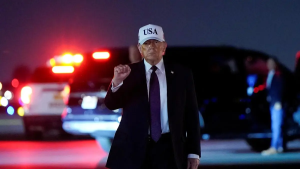
“When Trump starts to talk about what we’re going to do in South America or in our hemisphere, everybody needs to understand that … there’s a much greater play here,” Flynn said. At the center of this strategy is preventing hostile powers from embedding themselves in Venezuela.
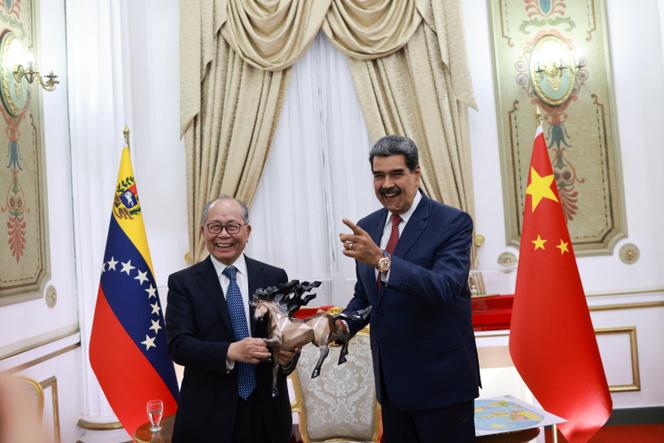
“We are not going to allow China or Russia to have beachfront property in Caracas,” Flynn stated firmly. “We’re just not going to. We cannot allow it.”
Flynn noted Venezuela’s significance extends beyond narcotics trafficking, though he described drug smuggling as devastating to the U.S., citing fentanyl-related deaths and warning that Venezuela remains a key hub for illicit networks. “It’s not just the fentanyl,” Flynn added, “but it’s also the other drugs.” He further explained that Venezuela’s natural resources and rare earth elements make it particularly attractive to foreign actors, including Russia, China, and Iran.
When addressing criticism from Senator Rand Paul, who has argued Trump should have sought congressional approval before authorizing such an operation, Flynn acknowledged concerns but stressed the risks of disclosure. “When we start to take a very sensitive operation like this … you’ve just got to be so careful about who knows about a particular mission,” he said.
Flynn also noted that Trump had given Maduro repeated opportunities to leave power voluntarily. “Trump gave Maduro more opportunities than he probably should have,” Flynn added. “Get the hell out of Dodge, otherwise we’re going to come after you.”