U.S. Military Executes Lethal Strikes Against Narco-Terrorist Vessels, Killing 11 in Caribbean and Pacific
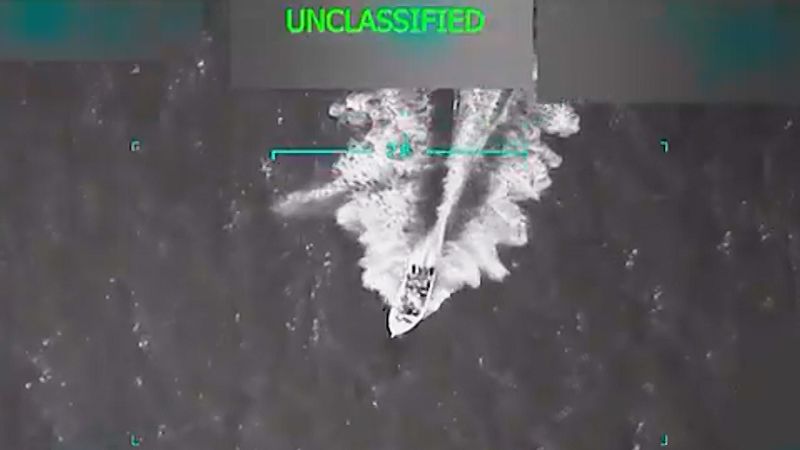
The Trump administration ordered lethal strikes against vessels it claimed were engaged in narco-trafficking this week, killing 11 suspected narco-terrorists in three operations across the eastern Pacific Ocean and the Caribbean Sea, according to U.S. military reports Tuesday.
U.S. Southern Command stated that Joint Task Force Southern Spear conducted the strikes at the direction of Gen. Francis L. Donovan, the unit’s commander, with no U.S. forces harmed. In a social media statement, SOUTHCOM confirmed intelligence indicated the vessels were “transiting along known narco-trafficking routes and were engaged in narco-trafficking operations,” but did not release supporting evidence or identify specific drug loads.
The statement read: “Late on February 16, at the direction of SOUTHCOM commander Gen. Francis L. Donovan, Joint Task Force Southern Spear conducted three lethal kinetic strikes on three vessels operated by Designated Terrorist Organizations. Eleven male narco-terrorists were killed during these actions: four on the first vessel in the Eastern Pacific, four on the second vessel in the Eastern Pacific, and three on the third vessel in the Caribbean.”
The operations are part of Operation Southern Spear, a U.S. military campaign targeting “Designated Terrorist Organizations” involved in drug trafficking. The Pentagon has described the effort as shifting toward using air and maritime force instead of interdictions and arrests.
The campaign began in early September and has taken place in international waters across the Caribbean and eastern Pacific, where the U.S. military has historically supported counterdrug surveillance and joint interdictions with the Coast Guard and regional governments. Independent tallies indicate at least 144 people have been killed in at least 41 strikes since the campaign began, though U.S. officials claim the targets are criminal networks operating outside the law.
The Trump administration has defended the strikes as necessary to disrupt narcotics flows and cartel operations. Senior officials, including War Secretary Pete Hegseth, argue that the campaign has deterred trafficking but have not provided case-by-case documentation. President Donald Trump has characterized the effort as part of a broader confrontation with Latin American cartels, an argument used by the administration to justify a more forceful regional posture than prior counterdrug approaches.
Human rights groups and international legal experts have criticized the strikes as potentially unlawful killings in international waters, arguing that using lethal force against suspected smugglers without judicial oversight or transparent evidentiary standards risks violating international law. Some members of Congress have called for clearer legal authorities, more public accounting of target selection, and details on how the government determines a vessel is tied to a “Designated Terrorist Organization,” as well as safeguards to prevent civilian deaths.
SOUTHCOM maintains that its actions are lawful and aligned with U.S. national interests but has limited public descriptions to short statements and videos rather than detailed after-action reports that would enable independent verification of trafficking or terrorist links. Gen. Donovan assumed command of SOUTHCOM this month, and the strikes occurred amid heightened scrutiny of the campaign’s pace and the administration’s decision to treat maritime drug smuggling networks as terrorist threats subject to lethal military force.
By Theodore Bunker