U.S.-Mediated Peace Talks in London Halted by European Skepticism Over Ukraine War Strategy
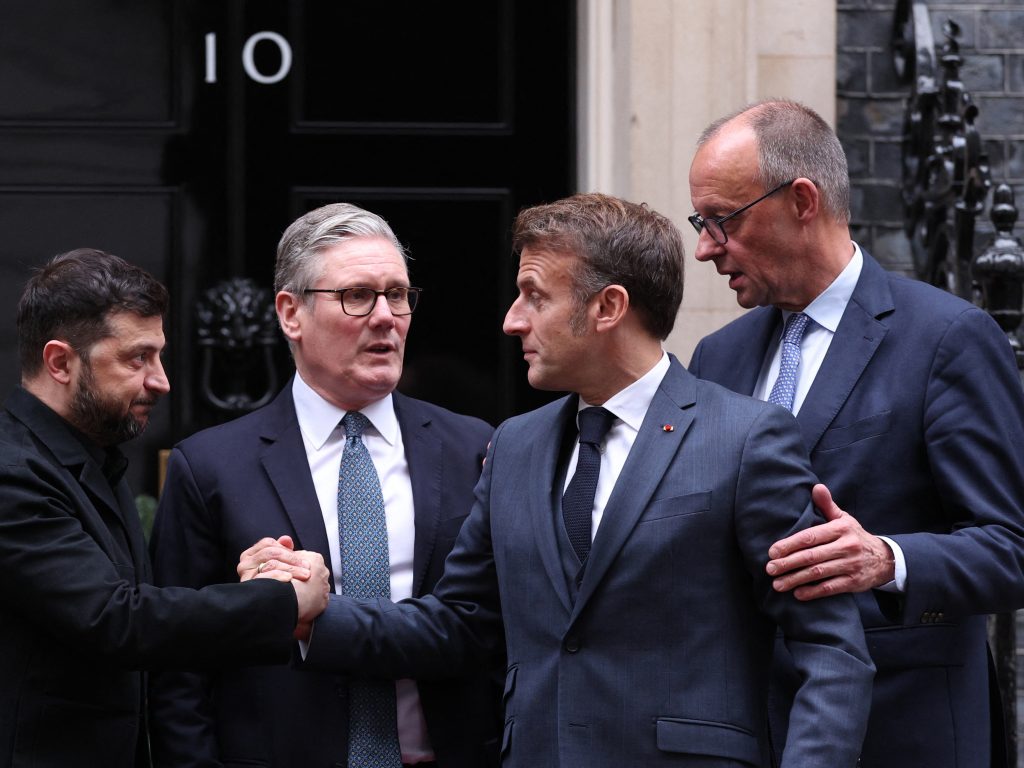
(L-R) Ukraine's President Volodymyr Zelensky, Britain's Prime Minister Keir Starmer, France's President Emmanuel Macron and Germany's Chancellor Friedrich Merz chat on the 10 Downing Street doorstep after a meeting in central London on December 8, 2025. (Photo by Adrian DENNIS / POOL / AFP via Getty Images)
European leaders expressed deep reservations about the U.S. plan to end hostilities in Ukraine during high-level discussions in London following failed diplomatic efforts.
German Chancellor Friedrich Merz voiced serious doubts regarding specific elements of a proposed peace deal, citing concerns over details provided by American sources. Speaking after meeting with British Prime Minister Keir Starmer and Ukrainian President Volodymyr Zelenskyy at Downing Street, Merz emphasized the need for caution before endorsing any resolution.
“I’m skeptical about some aspects of what we’re seeing from Washington,” Merz stated directly to reporters prior to their gathering in London. “That’s why we are here.”
The European officials insisted that continued support for Ukraine remains essential despite these reservations. They highlighted two key factors driving this stance: the Ukrainian President Volodymyr Zelenskyy’s leadership and the resilience of the Ukrainian military against Russian forces.
Merz acknowledged Europe’s leverage, noting they “have substantial cards in our hands” due to ongoing resistance on the ground and observable strains within the Russian economy. However, he refrained from prematurely accepting any peace proposal until these concerns are thoroughly addressed.
Starmer echoed Merz’s sentiments, advocating for a “just and sustainable ceasefire.” The discussions revealed that the leaders had already convened broadly with European allies in Downing Street after the meeting, reinforcing their unified stance against hasty agreements.
The London talks were part of an ongoing diplomatic process involving the United States as facilitator between Kyiv and Moscow. Despite significant mediation attempts over weeks, substantial divides persist—particularly concerning security assurances for Ukraine and territorial disputes regarding Russian claims.
A UK official confirmed that Western nations want Russia to agree on utilizing frozen Russian state assets sooner rather than later, aiming to alleviate Ukraine’s predicted $83 billion budget deficit in the coming fiscal year. But they anticipate collective action rather than unilateral moves from any single nation.
This initiative follows a failed round of talks hosted by the United States last month where similar issues arose. The persistent disagreements suggest that finding common ground remains challenging as winter approaches—a critical period for both sides involved.
Volodymyr Zelenskyy, the Ukrainian leader present at London-based discussions, was quoted in an earlier news report suggesting confidence amidst the European hesitation. He underscored the importance of unity among allies while stressing Ukraine’s reliance on continued American and European backing to face potential escalations from Russia.
European Leaders Doubt U.S.-Proposed Ceasefire Plan for Ukraine War
German Chancellor Friedrich Merz voiced profound skepticism about a U.S.-backed peace proposal during talks with British Prime Minister Keir Starmer and Ukrainian President Volodymyr Zelenskyy in London Monday. The meeting at Downing Street followed days of failed negotiations aimed at ending the conflict in Ukraine, leaving diplomatic pathways fraught with disagreement.
Merz expressed reservations without explicitly condemning his counterparts, stating he was present to scrutinize “some of the details” originating from Washington. He emphasized that European nations cannot simply accept the plan before verifying its feasibility for long-term peace and security implications.
Starmer echoed Merz’s cautious stance but reaffirmed support for a just resolution while avoiding direct critique of U.S.-led initiatives. The joint meeting with Zelenskyy underscored Europe’s commitment to Ukraine, despite lingering concerns about the proposed solution.
The London discussions came after months of back-and-forth in diplomatic channels and military stalemate on the ground. Merz noted that European involvement was necessary due to ongoing fighting and evidence suggesting the Russian economy is feeling strain from sanctions. “We have a lot to offer because we know what is at stake here,” he clarified.
The U.S.-facilitated talks with Kyiv and Moscow had yet to produce breakthroughs, with disagreements primarily centered around security guarantees for Ukraine’s sovereignty and territorial integrity. London-based officials confirmed that immediate use of frozen Russian funds remains vital but cautioned against rash decisions without thorough diplomatic groundwork.
Zelenskyy’s government continues resisting hasty agreements, while European allies insist on ensuring any resolution aligns with their principles before committing to ceasefire terms or asset liquidation measures.