U.S. Faces Potential DHS Shutdown as Congress Races Against Deadline
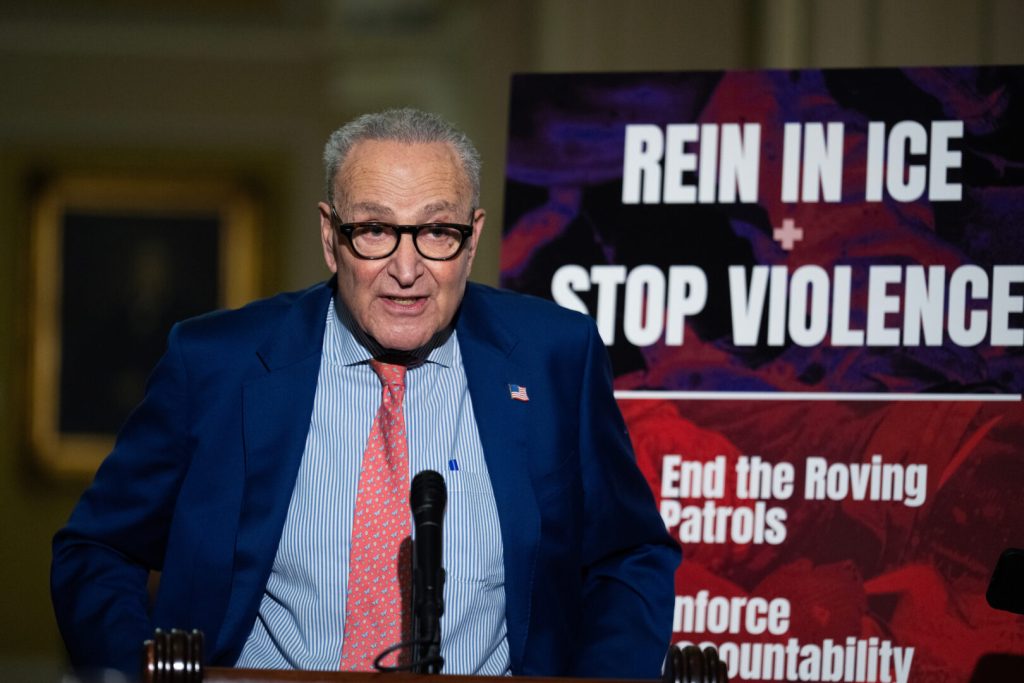
UNITED STATES - FEBRUARY 3: Senate Minority Leader Charles Schumer, D-N.Y., speaks during a news conference after the Senate luncheons in the U.S. Capitol on Tuesday, February 3, 2026. (Tom Williams/CQ Roll Call)
Senator John Fetterman (D-Pa.) warned Sunday he “absolutely” expects a partial government shutdown tied to Department of Homeland Security funding, with Congress facing a Feb. 13 deadline after a recently enacted spending law extended DHS funds only briefly.
Fetterman stated that the Democratic Party had provided what he called “10 kinds of basic things,” but Republicans quickly rejected them as “like a Christmas wish list.” He added that he did not know Democrats’ specific “red lines” and did not expect the party to get everything it wanted.
A DHS funding lapse would trigger shutdown procedures requiring the department to continue critical activities related to life, safety, and property protection while furloughing other work. However, practical impacts vary by component. Immigration and Customs Enforcement (ICE) and Customs and Border Protection (CBP) might remain operational due to large multiyear funding provisions in separate legislation, while other DHS functions could face disruption.
The political impasse has centered on immigration enforcement following two deaths in Minneapolis involving federal agents. Senate Democrats pushed for limits or conditions tied to Trump’s immigration enforcement after the incidents. In response, the administration deployed body cameras to immigration agents in Minnesota as part of a post-incident measure.
House Speaker Mike Johnson (R-La.) framed Democratic demands as a threat to DHS operations and officer safety, arguing that requirements for agents to remove face coverings and carry visible identification could expose personnel to retaliation. He claimed Democrats seek restraints beyond the $20 million for body cameras included in the stopgap plan and blamed the impasse on new conditions tied to how agents conduct arrests.
Democrats have pressed for accountability measures including requiring agents to wear body cameras, unmasking and identifying agents during enforcement actions, and tightening rules on warrant use. They also pushed to end roving patrols and add other limits on ICE operations as a condition for moving from the short-term extension to longer-term DHS funding.
With senators returning to Washington Monday, negotiators have days to reach an agreement or pass another short-term extension before risking a shutdown of DHS.