Trump Signs Memorandum to Withdraw U.S. from 66 International Organizations
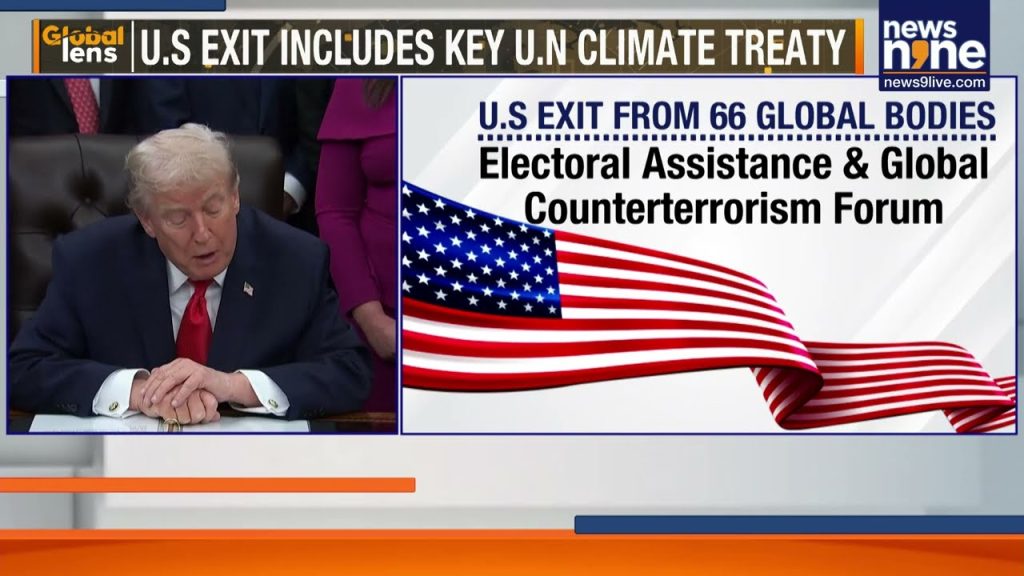
President Donald Trump on Wednesday signed a presidential memorandum directing the U.S. to withdraw from 66 international organizations that the White House said no longer serve American interests.
The White House stated the directive orders all executive departments and agencies to stop participating in and funding 35 non-United Nations organizations and 31 U.N. entities deemed contrary to U.S. national interests, security, economic prosperity, or sovereignty. The action follows a review of every international intergovernmental organization, convention, and treaty the United States belongs to, funds, or otherwise supports.
The White House said withdrawals will end American taxpayer funding and involvement in entities it argues advance globalist agendas over U.S. priorities or address issues so inefficiently that federal dollars are better spent elsewhere. In a fact sheet released Wednesday, the White House noted many targeted bodies promote radical climate policies, global governance, and ideological programs conflicting with U.S. sovereignty and economic strength.
The White House stated American taxpayers have spent billions on such organizations with little return while some groups criticize U.S. policies, advance agendas contrary to American values, or fail to achieve meaningful results despite large budgets. Congressional Research Service reporting on U.S. contributions to the U.N. system noted funding occurs through assessed dues and voluntary contributions, meaning withdrawals can have broad operational impacts beyond specific entities targeted.
The memorandum represents the administration’s most expansive pullback from multilateral engagement to date, extending Trump’s long-running argument that international commitments must produce measurable benefits for Americans without constraining U.S. decision-making. The White House said Trump initiated withdrawal from the World Health Organization and Paris Climate Agreement immediately upon returning to office, framing both steps as necessary to restore national sovereignty over public health and energy policy.
The White House also stated Trump notified the Organization for Economic Co-operation and Development on day one that its global tax deal has no force or effect in the U.S., directing an investigation into whether foreign tax rules are extraterritorial or disproportionately target American companies. The administration’s broader posture includes steps to leave or defund politically charged U.N. bodies, such as a February 2025 executive order withdrawing from the U.N. Human Rights Council and prohibiting future U.S. funding for the U.N. Relief and Works Agency for the Near East.
The White House said Wednesday’s memorandum aims to save taxpayer money and refocus resources toward America First priorities like infrastructure, military readiness, and border security while ending what it views as subsidized hostility toward U.S. interests. The administration has not yet provided a detailed public roster of all 66 organizations but instructed agencies to wind down participation and funding consistent with the memorandum’s directives.
Critics argue such withdrawals could reduce U.S. influence and weaken international coordination on cross-border challenges. Public health experts warned earlier actions, like withdrawing from the World Health Organization, might weaken U.S. readiness for future outbreaks. A Georgetown University health-law expert noted such moves would isolate the U.S. diplomatically and in pandemic response. Amnesty International USA criticized Trump’s decision to withdraw from the U.N. Human Rights Council, calling it “performative disregard for human rights.” Financial analysts warned a sweeping U.S. retreat from multilateral institutions could have consequences beyond diplomacy, with an S&P Global multilateral-lender analyst describing withdrawal from the World Bank as “unprecedented” and potentially threatening its top-tier credit ratings.
Supporters argue the president is correcting decades of U.S. overcommitment to bureaucratic international bodies that do not serve American workers, taxpayers, or national security. They contend in an era of great-power competition, Washington should prioritize bilateral leverage, hard-power deterrence, and direct investment at home rather than underwriting institutions that often turn against U.S. interests. Critics counter such exits could reduce America’s ability to shape global standards and norms while leaving strategic space for rivals to dominate rulemaking in areas ranging from public health to development policy.
The White House emphasized the withdrawals align with Trump’s America First doctrine and reflect an effort to ensure every international relationship advances U.S. security, sovereignty, and economic strength. Implementation now shifts to federal agencies directed to halt participation and funding, setting up scrutiny over affected programs, remaining statutory obligations, and how quickly the U.S. can unwind decades of multilateral commitments.