Trump Set to Contrast Nation’s Current Trajectory with Past Year in State of the Union Address
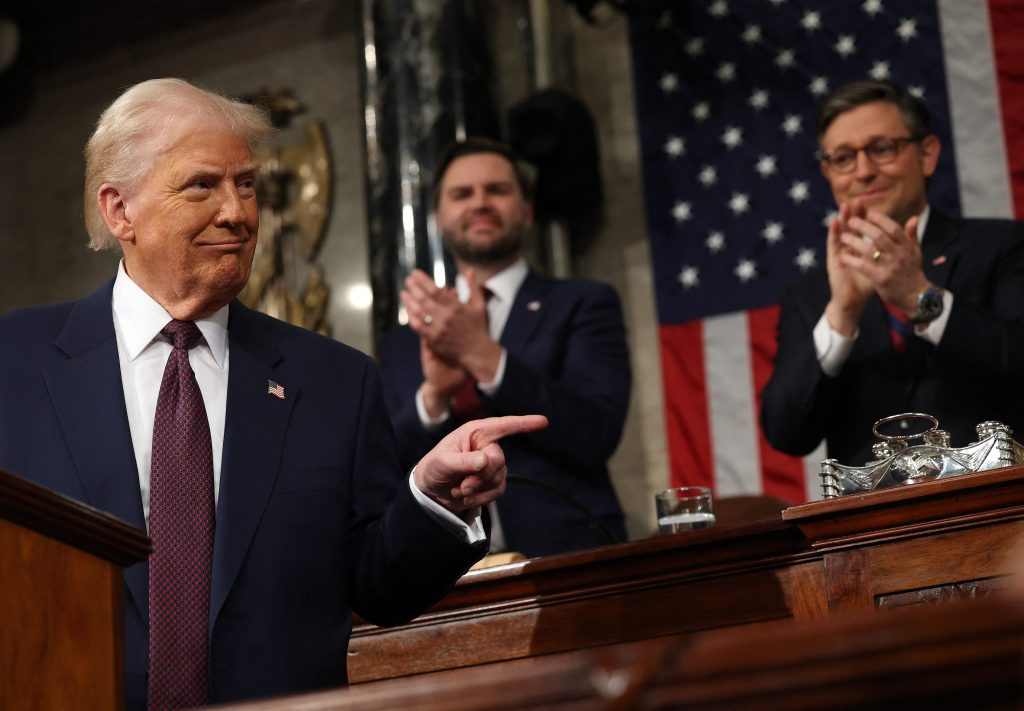
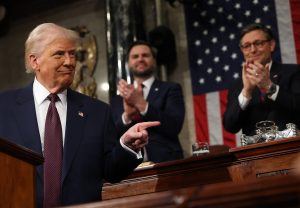
President Donald Trump will use Tuesday night’s State of the Union address to contrast the nation’s current trajectory with where it stood a year ago, according to Sen. Roger Marshall on Monday.
Marshall stated the president will focus on gains in border security, public safety, and economic growth during the speech. He highlighted “historically low murder rates” and “stronger immigration enforcement” as key indicators the administration would emphasize.
The Kansas Republican also noted Trump is expected to spotlight U.S. military operations abroad—including missions in Iran and Venezuela—as evidence of renewed American strength on the world stage. On economic matters, Marshall said Trump will stress rising real wages and easing costs for families. “Real wages are up 3% over the last six months,” he added, noting wage growth has outpaced inflation.
Marshall cited lower gas and electricity prices and declining interest rates as signs the economy is stabilizing. “Overall, this big ship we call America is now moving in the right direction,” he said.
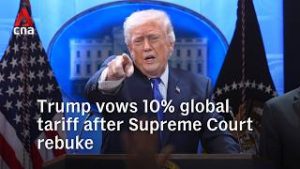
The senator expressed support for Trump’s decision to reinstate a 15% global tariff by invoking a separate statutory authority after the Supreme Court struck down the administration’s previous tariff framework. He argued the strategy is delivering economic and national security gains. Marshall described the high court’s ruling as “disappointed but not surprising,” stating, “I think [Trump] was anticipating it. He’s already reinstituted a 15% tariff. I think the average rate before was probably 15.5, 16%. We’ll end up at 15%.”
Marshall claimed the tariffs have strengthened America’s hand abroad, enabling negotiations with major partners including India. “Because of these tariffs, the president was able to negotiate agreements with our top 10 trade partners,” he said. “We’ve never had a trade agreement with India before.” He also noted the policy has been used for diplomatic leverage, such as encouraging India to shift energy purchases toward the United States rather than Russia.
Beyond foreign policy, Marshall contended tariffs are driving tangible economic benefits at home—particularly in Kansas. “All over my state, I’m seeing manufacturing jobs move back to Kansas because of the tariffs overseas,” he said.