Supreme Court Faces Test of Trump’s Tariff Authority as ‘600 Billion’ Claim Sparks Legal Battle
By Eric Mack | Monday, 05 January 2026 09:51 AM EST
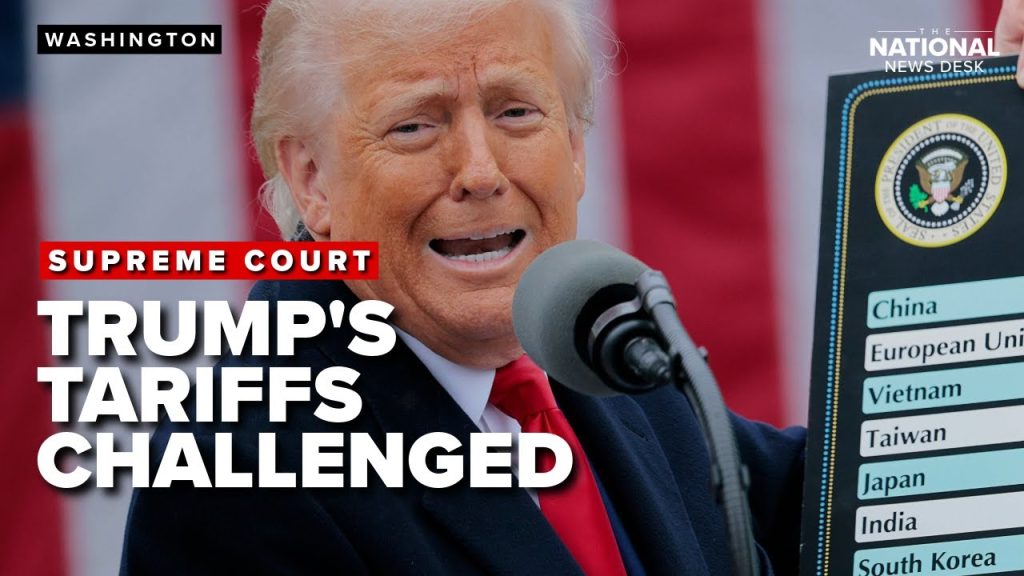
Amid the pending Supreme Court decision on tariffs, President Donald Trump claimed that $600 billion in tariff revenue represented a success and was vital to “national security.”
He also criticized “fake news media” for smearing efforts, stating: “We have taken in, and will soon be receiving, more than 600 Billion Dollars in Tariffs, but the Fake News Media refuses to talk about it because they hate and disrespect our Country, and want to interfere with the upcoming Tariff decision, one of the most important ever, of the United States Supreme Court.”
In a New Year’s Eve interview on Newsmax, Steve Forbes predicted the Supreme Court would act to unwind Trump’s tariffs actions, albeit allowing the income to date to be kept.
Forbes and Trump administration officials have noted that President Trump may have alternatives to enforce tweaked tariffs to rebalance global trade and leverage national security. However, Commerce Secretary Howard Lutnick and Treasury Secretary Scott Bessent have not explicitly detailed these measures outside of saying they are “in their hip pockets” in the event of a negative Supreme Court ruling.
The Trump administration faced chilly reception from the Supreme Court in November when a majority questioned the president’s use of an emergency powers law to impose worldwide tariffs.
Under the 1977 International Emergency Economic Powers Act (IEEPA), Trump has asserted extraordinary authority to implement tariffs without congressional approval, claiming that illegal immigration and drug trafficking across U.S. borders constituted a national emergency requiring action against Canada, Mexico, and China in February. By April, he expanded his actions to worldwide tariffs after declaring America’s trade deficits “a national emergency.”
Chief Justice John Roberts expressed uncertainty over the president’s authority under IEEPA, noting: “The law has ‘never before been used to justify tariffs. No one has argued that it does until this particular case.'”
Justice Gorsuch signaled concern about the potential transfer of congressional tax powers to the executive branch, stating: “The power to reach into the pockets of the American people is just different and it’s been different since the founding,” when disputes over taxes helped spark the American Revolution.
Justices Amy Coney Barrett and Neil Gorsuch, both Trump appointees, appeared likely to rule against the administration. A potential majority in a ruling against tariffs would include at least three liberal justices and two conservative allies of the president.
Justice Brett Kavanaugh highlighted the importance of understanding Nixon’s 1970s tariff policy under a predecessor law, stating: “Understanding Nixon’s tariffs… is real important to deciding this case correctly.”
Barrett and Kavanaugh questioned whether the president could order a complete trade embargo but not impose even a 1% tariff. Barrett asked: “Doesn’t it seem like it would make sense, then, that Congress would want the president to use something that was … weaker medicine than completely shutting down trade as leverage?”