Sen. Schmitt’s New Law Targets Beijing’s ‘Kangaroo Courts’ in U.S. Enforcement
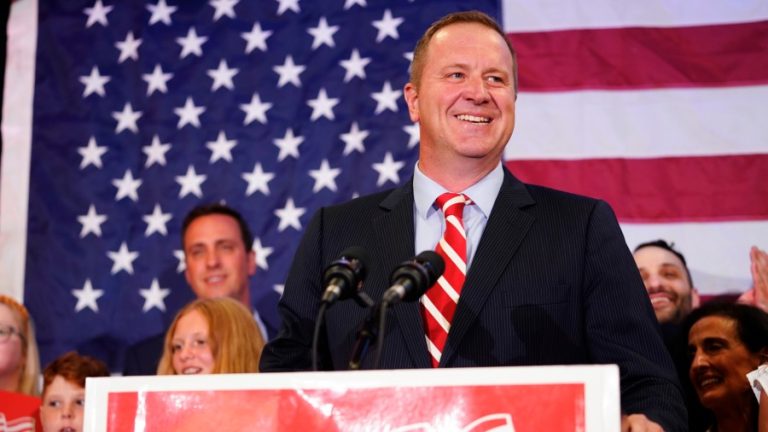
Sen. Eric Schmitt, R-Mo., has proposed legislation to prevent China from using its courts as political weapons against Americans.
The move follows what he described as “authoritarian lawfare” linked to the Wuhan lab controversy and COVID-19.
Schmitt introduced the “Ending Chinese Lawfare Act,” designed to stop U.S. courts from recognizing or enforcing civil judgments issued by Chinese courts when those rulings are politically motivated and supported by the Chinese government or the Communist Party.
The legislation comes after Schmitt became a target of a massive retaliatory lawsuit in Wuhan. The Wuhan Institute of Virology, the Chinese Academy of Sciences, and the municipal government in Wuhan filed a case in the Intermediate People’s Court in Wuhan seeking approximately $50 billion from Schmitt, Missouri, and Andrew Bailey, who succeeded Schmitt as state attorney general and carried forward a prior case.
The Chinese plaintiffs demanded apologies and “compensating losses,” with notification of the lawsuit made this month despite being filed in spring.
Schmitt, who previously sued China while serving as Missouri attorney general, stated that the Chinese case is “politically motivated, legally meritless,” and evidence that Beijing is willing to weaponize “kangaroo courts” against American citizens.
“My bill makes clear that no politically motivated judgment issued by a Chinese court will ever be recognized or enforced in the United States,” he told reporters.
The backdrop includes Missouri’s earlier lawsuit resulting in a $24 billion judgment against the Wuhan Institute of Virology and related entities. The Chinese defendants did not contest the case, leading to a default judgment. Missouri officials have pledged to pursue collection, including by seizing Chinese-owned assets.
Schmitt has characterized the Wuhan lawsuit as intimidation and retaliation aimed at distracting from China’s pandemic-era role and punishing Americans seeking accountability.
On social media, Schmitt described the case as a “$50 Billion lawfare campaign,” emphasizing he would not be “bullied” or “intimidated.”
The proposal builds on U.S. laws that have previously blocked foreign judgments, including a 2010 law signed by President Barack Obama preventing enforcement of defamation rulings from countries with weaker free-speech protections.
However, Schmitt’s bill targets China specifically, arguing its judicial system is subordinate to the Communist Party and lacks independence. Under the proposal, Chinese civil judgments could not be enforced in the U.S. if determined to be initiated or supported by the Chinese government or the Communist Party and intended to undermine U.S. government actions or constitutional rights.
The legislation would also allow defendants to move cases from state court to federal court and seek attorney fees.
Schmitt’s effort directly challenges Beijing’s strategy: silencing critics, rewriting history, and using state-controlled institutions to punish dissent.