Kanye West’s Apology for Antisemitic Remarks and Nazi Imagery Highlights Mental Health Struggles
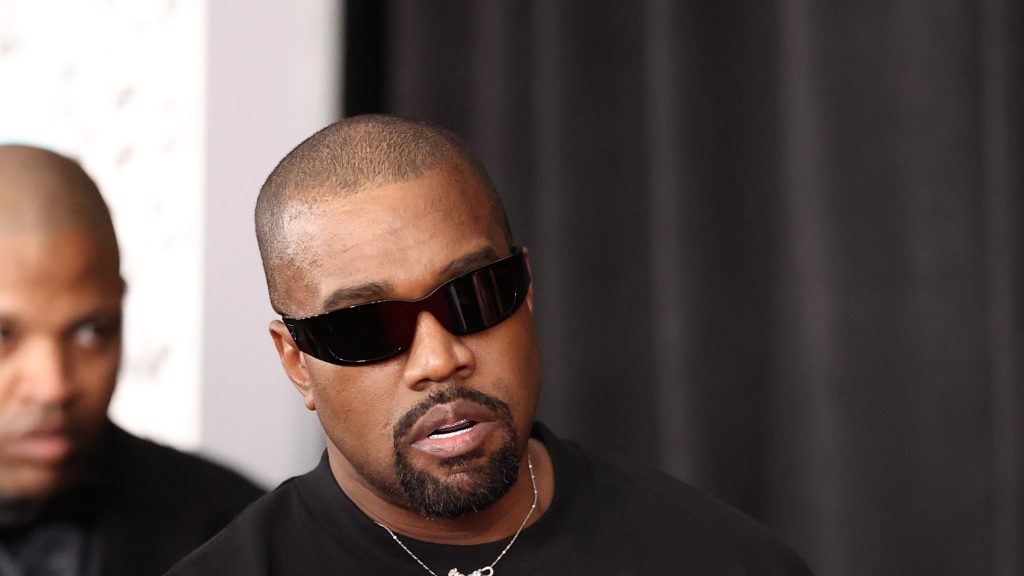
Ye, the artist formerly known as Kanye West, issued a formal apology Monday for antisemitic remarks and his use of Nazi imagery, attributing his behavior to untreated mental health issues stemming from a prior brain injury.
In a full-page advertisement published in The Wall Street Journal’s print edition, Ye acknowledged the harm he caused while struggling with his mental health. The letter was directed “to those I’ve hurt” and focused on his mental health history, including a 2002 car accident that he said resulted in an undiagnosed frontal lobe injury.
“Twenty-five years ago, I was in a car accident that broke my jaw and caused injury to the right frontal lobe of my brain,” Ye wrote. “The deeper injury, the one inside my skull, went unnoticed.”
Ye stated that the possibility of a frontal lobe injury was not considered at the time and he was only diagnosed with the condition in 2023. He said the delay contributed to severe mental health problems before he received a bipolar disorder diagnosis. “The medical oversight caused serious damage to my mental health and led to my bipolar type-1 diagnosis,” he added.
Describing the condition, Ye noted that bipolar disorder can create a distorted perception where individuals “feel like they’re seeing the world more clearly than ever, when in reality you’re losing your grip entirely.”
The apology follows years of inflammatory remarks and behavior. In 2022, Ye publicly praised Adolf Hitler during an interview, stating he “liked” the Nazi leader. That same year, his social media account was temporarily suspended after he posted that he was “going death con 3 on JEWISH PEOPLE.” He faced further suspension later in 2022 after sharing an image combining a swastika with the Star of David.
In 2024, Shopify shut down an online store linked to Ye’s website after it sold T-shirts displaying large swastika symbols. Addressing this period, Ye wrote that he had lost contact with reality. “In that fractured state, I gravitated toward the most destructive symbol I could find, the swastika,” he said.
He admitted to feeling regret for his actions and rejected accusations of extremist beliefs. “I regret and am deeply mortified by my actions in that state, and am committed to accountability treatment, and meaningful change. It does not excuse that I did though. I am not a Nazi or an antisemite. I love Jewish people,” Ye wrote.
He also apologized to Black supporters, whom he described as the foundation of his identity. “To the black community — which held me down through all of the highs and lows and the darkest of times. The black community is, unquestionably, the foundation of who I am. I am sorry to have let you down. I love us.”
Ye said he sought treatment after reaching what he described as a personal low. He credited his wife, Bianca Censori, with encouraging him to get help and stated he now follows a structured plan involving medication, therapy, exercise, and lifestyle changes, which he claims have provided clarity.
Ye, who launched a short-lived presidential bid in 2020, said he plans to refocus on creative work and producing “positive, meaningful art: music, clothing, design, and other new ideas to help the world.”
“I’m not asking for sympathy, or a free pass,” he wrote. “I aspire to earn your forgiveness. I write today simply to ask for your patience and understanding as I find my way home.”