Jesse Jackson’s Unflinching Critique of Clinton’s Welfare Bill: A Political Fire That Never Went Out

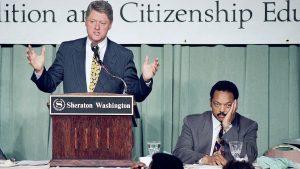
In an August 1996 interview at the Democratic National Convention in Chicago, Reverend Jesse Jackson, then a two-time Democratic presidential hopeful and civil rights leader, expressed deep frustration over President Bill Clinton’s signing of the Personal Responsibility and Work Opportunity Reconciliation Act (PRWORA) on August 22.
Jackson described the legislation as sending “economic shocks” to the poor by capping federal benefits and requiring work for eligibility. When asked why he hadn’t challenged Clinton in the Democratic primaries, Jackson replied: “He only signed the bill a few days ago,” adding, “It was too late to challenge him.” He later stated that had he known Clinton would sign it, he would have opposed the president in the primaries.
At the convention, Jackson delivered a stark critique of the welfare reform bill, calling it an abandonment of Franklin Roosevelt’s six-decade guarantee of support for women and children. “In 1968, the tension within our party was over warfare,” he told delegates. “In 1996, it’s welfare.” He emphasized that Democrats “have the right to express ourselves” while remaining a staunch supporter of Clinton and Al Gore.
Jackson’s political journey began as a potential heir to civil rights icons Martin Luther King Jr. and Adam Clayton Powell Jr. Through organizations like Operation PUSH and later the Rainbow Coalition, he became a dominant force in American politics. Despite never holding elected office himself, his children followed in his footsteps: Jesse Jackson Jr. served as Illinois’ representative for the 2nd District until his resignation in 2012 amid corruption charges, and Jonathan Jackson has represented the state’s 1st District since 2022.
Jackson died at age 84 on Tuesday, leaving behind a legacy of activism that reshaped political discourse for Black Americans and beyond. He was known as “Action Jackson” — a force of nature who remained politically active long after his peak influence.
John Gizzi is a chief political columnist.