Iranian Missile Threats Escalate as U.S. Warns of “Unsustainable” Danger in Geneva Negotiations
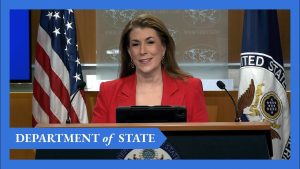
Secretary of State Marco Rubio described Iran’s refusal to address its ballistic missile program as a “big problem” and an “unsustainable threat” to the American home front ahead of Thursday’s indirect nuclear negotiations in Geneva, marking the third round this month between Washington and Tehran.
Rubio stated that Iran possesses a substantial number of ballistic missiles—particularly short-range systems capable of targeting U.S. military installations across the Middle East, including bases in the United Arab Emirates, Qatar, and Bahrain. He emphasized that these conventional weapons are designed to threaten American forces and citizens if deployed.
The remarks came during Rubio’s interview at Robert L. Bradshaw International Airport in Basseterre, Saint Kitts and Nevis following meetings with Caribbean Community (CARICOM) leaders. The United States currently maintains approximately 30,000 to 40,000 troops in the Middle East region, including facilities near Iran.
Rubio indicated that Iranian missiles can reach about nine U.S. military bases, stating: “They are all within range of a system comprising thousands of Iranian drones and short-range ballistic missiles threatening our force presence.” He stressed that these conventional threats must be addressed alongside nuclear concerns.
The Trump administration dispatched envoys Steve Witkoff and Jared Kushner to meet indirectly with Iranian regime officials led by Foreign Minister Abbas Araghchi. Oman is mediating the talks, which began in Muscat and continued in Geneva.
Omani Foreign Minister Badr Albusaidi noted that both sides exchanged “creative and positive ideas” during Thursday’s session, adding: “Both U.S. and Iranian negotiators have adjourned for a break. We’ll resume later today. We hope to make more progress.”
Rubio also warned that Iran is developing intercontinental ballistic missiles capable of reaching the continental United States and has already built systems threatening much of Europe. He highlighted the regime’s efforts to expand missile range, including satellite launches.
The secretary of state expressed disbelief at how Iran continues to invest heavily in ballistic missile development despite facing severe economic sanctions, a collapsing economy, and widespread public hardship: “Somehow they still find the money to invest in missiles of greater and greater capacity every year.”
Rubio referenced President Donald Trump’s State of the Union address, noting that while the president has emphasized diplomacy as his preferred approach, Iran poses a “very grave threat” to the United States. “They are in possession, first and foremost, after their nuclear program was obliterated,” Rubio said. “They were told not to try to restart it and here they are.”
President Trump reiterated that Iran has not abandoned its pursuit of nuclear weapons, stating: “We wiped it out, and they want to start all over again.” He also noted the absence of a commitment from Tehran to “never have a nuclear weapon.”
The White House confirmed President Trump prefers diplomacy but remains prepared for military action if necessary. A U.S. military buildup in the Middle East—described as the largest since the 2003 Iraq invasion—includes two aircraft carrier strike groups and other naval assets deployed to the Arabian Sea and eastern Mediterranean.