House Passes Revised SAVE Act to Ensure Only U.S. Citizens Vote in Federal Elections
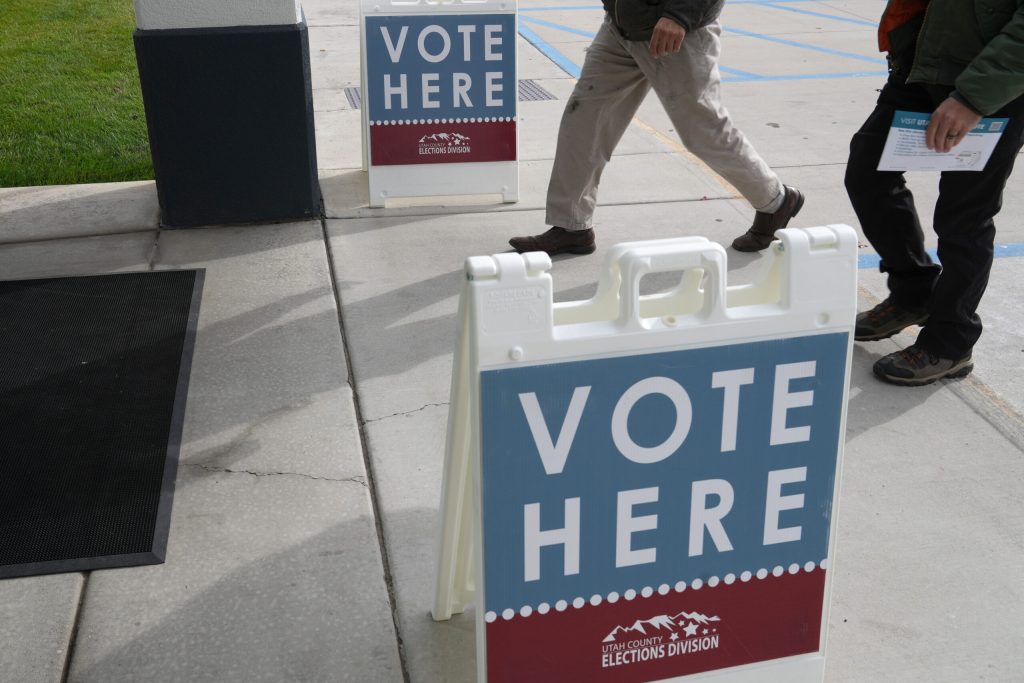
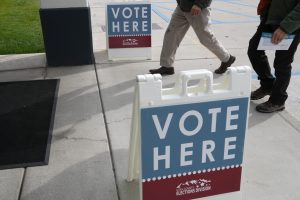
OREM UT - NOVEMBER 08: Voters walk into cast their ballots at the Center Point Church on November 8, 2022 in Orem, Utah. After months of candidates campaigning, Americans are voting in the midterm elections to decide close races across the nation. (Photo by George Frey/Getty Images)
By Hans von Spakovsky | Wednesday, February 18, 2026 03:32 PM EST
The U.S. House of Representatives approved the revised Safeguard American Voter Eligibility (SAVE) Act on February 11, now requiring the Senate to overcome a threatened filibuster and pass this legislation that has long been needed to ensure only American citizens vote in federal elections.
Democrats’ uniform opposition to the SAVE Act—combined with their resistance to enforcing immigration laws to identify and remove millions of illegal aliens deliberately introduced into the country under the Biden administration—reveals their motivation: facilitating voting for non-citizens without detection or prosecution, a strategy they claim will help win elections. Similarly, Democrats create states as sanctuaries for undocumented immigrants because they understand that apportionment is based on total population rather than citizen population, granting these states additional seats in the U.S. House and Electoral College representation.
The bill corrects a misinterpretation from the 2013 Supreme Court ruling in Arizona v. Inter-Tribal Council, which held that the National Voter Registration Act prohibits states from requiring proof of citizenship during federal voter registration. The SAVE Act mandates proof of U.S. citizenship for all federal elections and provides an extensive list of acceptable documents, including REAL ID driver’s licenses, passports, photo IDs showing place of birth in the United States, birth certificates, adoption decrees, naturalization certificates, and similar evidence. Photo IDs without place of birth can also be used alongside such documentation.
For those unable to meet these requirements, states must allow individuals to sign an affidavit affirming U.S. citizenship and establish a process to explain discrepancies in their records. Local officials determine whether applicants have sufficiently established U.S. citizenship. The legislation further directs federal agencies from the Social Security Administration to the Department of Homeland Security to cooperate with states on citizenship verification—a directive Democratic administrations have consistently resisted.
Second, the SAVE Act includes a photo ID requirement for federal elections similar to successful state-level voter identification laws. States like Georgia have seen increased registration and turnout after implementing such laws, likely due to voters’ confidence that their ballots will not be invalidated by illegal votes. Critics claim this falls outside federal authority, but the 2002 Help America Vote Act already established a weak federal ID requirement for mail-in voters under 52 U.S.C. § 21083.
The article refutes claims of “voter suppression” by noting that voter ID requirements have not suppressed participation among rural populations, low-income individuals, people of color, or women—a point echoed by the League of Women Voters’ own erroneous claim that the SAVE Act would disenfranchise 69–70 million voters. It also addresses the misconception that voter ID laws prevent married women from voting; the SAVE Act will not affect this right, as other government programs requiring identity verification (such as employment) do not restrict married women’s eligibility.
Aliens have been prosecuted for illegal registration and voting in elections, with states like Virginia and Texas discovering non-citizens on their rolls. However, enforcement has typically occurred through coincidence due to the honor system in voter registration. The U.S. has many close elections, and there is no need—or desire—to allow non-citizens to subvert them.
Hans von Spakovsky is a Senior Legal Fellow at the Edwin Meese III Institute for the Rule of Law at Advancing American Freedom and a former FEC Commissioner.