Historians Split on Trump’s State of the Union Address: Praise and Criticism Emerge from Esteemed Experts
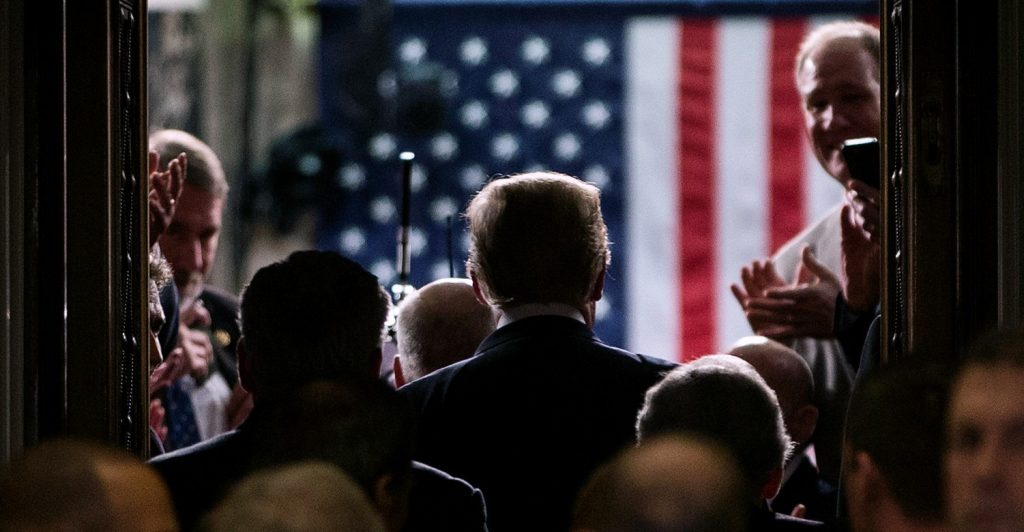
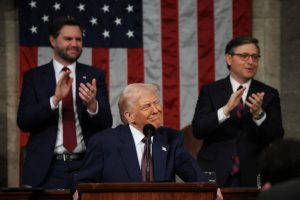
After President Donald Trump concluded his State of the Union address Tuesday night, four prominent historians offered contrasting perspectives on the speech.
Some criticized the president’s tone and content, while others praised the 100-minute address as a strong example of his second term’s opening.
Chapman University Professor Luke Nichter, author of “1968: The Year That Broke Politics,” described the speech as blending typical annual elements with surprises. “It took the usual grab bag approach to listing past achievements and suggesting new proposals — including ending sanctuary cities, the SAVE America Act, and a new ‘war on fraud’ led by Vice President JD Vance,” Nichter said. He noted that the speech heavily celebrated heroic Americans, from Olympic hockey players to military veterans and crime survivors.
Nichter also observed that Democrats did not attempt to match Trump’s style: “Unlike previous State of the Unions, Democrats didn’t try to compete with him — no color-coordinated outfits, loud chants requiring calming by the Speaker, or synchronized signs. Even Rep. Al Green, D-Texas, was escorted from the chamber early.”
The speech ended with a call to commemorate the U.S. 250th anniversary in July, featuring what Nichter called “arguably the most poetic passage” of any Trump address — one that was “inspiring, uplifting, and optimistic,” while also challenging Americans to look ahead.
Irwin Gellman, currently working on his fourth volume about Richard Nixon, stated: “Trump could not have done much better than he did.” He noted that Democrats’ silence during the speech — simply sitting without applauding when Republicans clapped — enhanced Trump’s performance. Gellman also praised Trump’s announcement of two Medals of Honor and his effective defense of domestic policies such as healthcare affordability and 401(k) accounts.
However, Christopher Whipple, author of “The Gatekeepers: How the White House Chiefs of Staff Define Every Presidency,” offered a critical assessment. “Trump completely whiffed tonight in his State of the Union address,” Whipple said, quoting White House chief of staff Susie Wiles. He noted that Trump stuck to a script that failed to address affordability or Jeffrey Epstein and other pressing issues, instead focusing on “dystopian scenes of American carnage” and demonizing opponents.
In contrast, Quincy University Professor Justin Coffey, author of a biography of former Vice President Spiro Agnew, described Trump as “aggressive, confident, and defiant.” Coffey highlighted that the speech defended Trump’s record, particularly his claim that the “One Big Beautiful Bill” had succeeded. He noted Trump emphasized 100% private-sector job growth and directly addressed the Supreme Court. Coffey concluded that Trump’s address could set a precedent, as it marked the first time Democrats boycotted the event.
Coffey observed that an estimated 50 Democratic lawmakers skipped the address, indicating Democrats might continue this practice going forward.