Eddie Murphy Clears Up 2007 Oscars Exit: “I Wasn’t Going to Be the Sympathy Guy”
By Zoe Papadakis
Monday, 05 January 2026 02:03 PM EST
Eddie Murphy has addressed long-standing claims that he angrily exited the 2007 Academy Awards after losing the Oscar for best supporting actor, stating his early departure was motivated by avoiding public sympathy rather than bitterness.
Murphy, who was nominated for his role as James “Thunder” Early in “Dreamgirls,” revealed the circumstances during an interview with Entertainment Weekly. At the time, media reports, including a widely circulated TMZ article, alleged that the comedian stormed off after losing the award to Alan Arkin.
Murphy clarified the account was inaccurate. “What happened was I was at the Oscars, I had lost, and then people kept coming over to me and kept patting me on the shoulder,” he explained. “Clint Eastwood came and rubbed my shoulder. And I was like, ‘Oh no, no—I’m not gonna be this guy all night. Let’s just leave.'”
He emphasized that he did not storm out, adding: “I didn’t storm out. I was like, ‘I’m not gonna be the sympathy guy all night.'”
The nomination marked Murphy’s first Academy Award nod following decades as one of Hollywood’s most successful stars. He competed against a crowded field that included Jackie Earle Haley (“Little Children”), Djimon Hounsou (“Blood Diamond”), and Mark Wahlberg (“The Departed”).
Rachel Weisz presented the award, and Murphy was seen applauding politely as Arkin was announced as the winner for “Little Miss Sunshine.” Murphy left the ceremony before “Dreamgirls” co-star Jennifer Hudson won best supporting actress and before the film’s musical performance featuring its three best original song nominees.
Murphy stated that the loss itself was not a surprise. He believed Arkin was the clear front-runner well before awards season began. “Jeff Katzenberg invited me over to see ‘Little Miss Sunshine’ six months before it came out in the theaters, and I literally watched the movie, and I watched Alan — and I hadn’t been nominated or anything yet — and I watched the movie, and I turned to Jeff afterward, and I said, ‘Now that performance right there is one of those performances that will steal somebody’s Oscar,'” Murphy recalled.
He added: “I said those exact words. I was like, ‘He could steal somebody’s Oscar,’ then he stole mine.” Murphy later clarified: “No, I don’t feel like he stole mine.”
Arkin, who died in 2023, had a decadeslong career that Murphy said played a role in Arkin’s awards success. Murphy noted that winning an Oscar depends on more than the performance itself. “Winning an Oscar is more art than science,” he stated. “It’s not like oh, you do this, and you do that, and you win the Oscar. No, it’s all this intangible stuff that comes with winning: campaigning and your past stuff and what do they owe you and s. All of that stuff comes into play when you get Oscars.”
He said Arkin benefited from that combination, adding: “When you add all of that stuff into it, he totally deserves his Oscar for his whole career. He’s an amazing actor.”
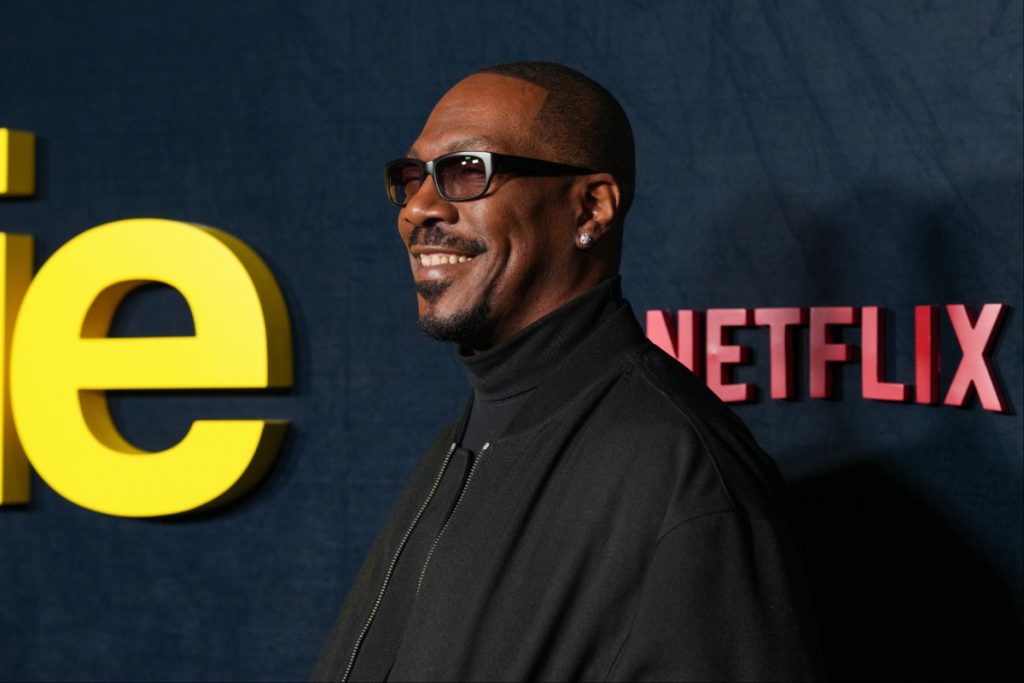
In his Netflix documentary, “Being Eddie,” Murphy also reflected on award ceremonies, calling losses a “mindf,” largely because of the effort required to attend. “The mindf for me is that I get dressed and come to the thing, ’cause I would usually not go to award shows,” he said. “Whenever I lose, I’m like, ‘These motherfers made me come all the way down.’ I could have fing lost at home. I’m all in the fing tuxedo.”
Murphy also revisited his complicated history with the Academy, including remarks he made while presenting best picture at the 1988 Oscars, when he criticized the institution’s lack of recognition for Black performers. “I’ll probably never win an Oscar for saying this,” he said, referring to his call that Black people would no longer “ride the caboose of society” or “bring up the rear.”