DOJ Requests Release of Records in Epstein Case
By James Morley III | Wednesday, 26 November 2025 07:53 PM EST
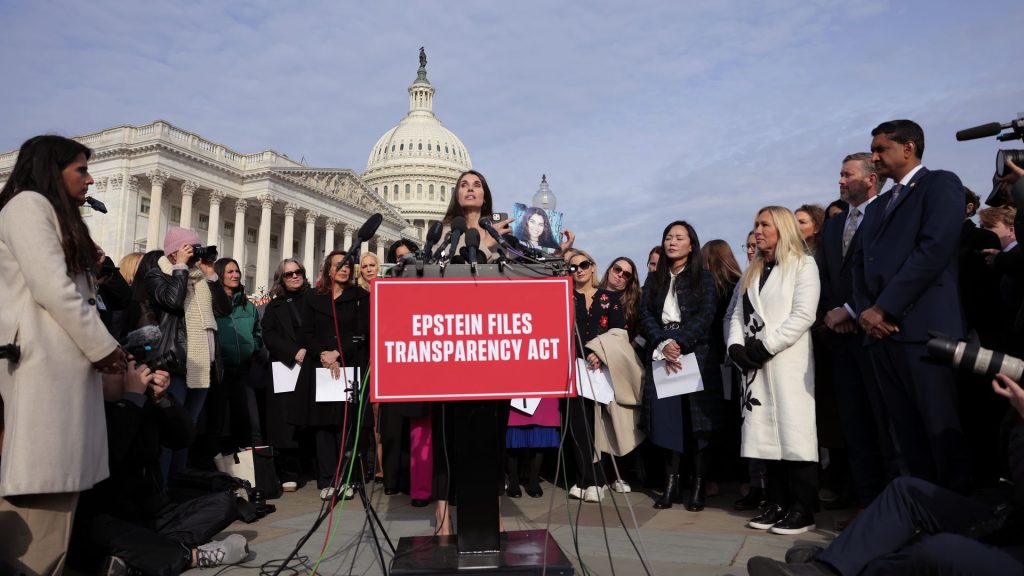
The Department of Justice on Wednesday requested a federal judge to release records related to disgraced financier Jeffrey Epstein. In the letter, prosecutors asked Judge Paul A. Engelmayer to lift the protective order covering evidence provided to Ghislaine Maxwell’s defense team before her trial. The DOJ also requested that these materials be released under the newly enacted Epstein Files Transparency Act, signed by President Donald Trump.
Material currently under the protective order includes search warrants, financial and travel records, flight manifest, government and police reports, arrest records, booking photos, civil investigation depositions, Epstein estate documents, and third-party interview notes, including those from victims. The Justice Department has also requested that the judges overseeing both the Maxwell and Epstein cases issue a prompt ruling on the release of grand jury transcripts involving law enforcement officers and other evidence subject to the protective order.
The department emphasized that any released records will include redactions to protect victims’ identities. According to prosecutors, they have heard from multiple attorneys representing survivors of Epstein and Maxwell who have raised concerns about the release process. They added that the department is “simultaneously investigating counsel’s claims regarding the provenance and nature of documents provided to and ultimately released by Congress.”
Maxwell, 63, is currently serving a 20-year sentence following her conviction on charges including conspiracy to entice a minor to travel for illegal sex acts, conspiracy to transport minors for illegal sex acts, transporting a minor for illegal sex acts, and sex-trafficking conspiracy. The continued scrutiny of Epstein’s network has fueled political debate, particularly among some in the MAGA movement who argue that justice for Epstein’s victims remains incomplete.
“These categories are based principally on the Government’s initial review of discovery letters and logs,” the DOJ added, noting that the list “is not entirely comprehensive because the Government’s review is ongoing.”