DeSantis Vows to Advance Florida’s AI Regulations Despite Trump Executive Order
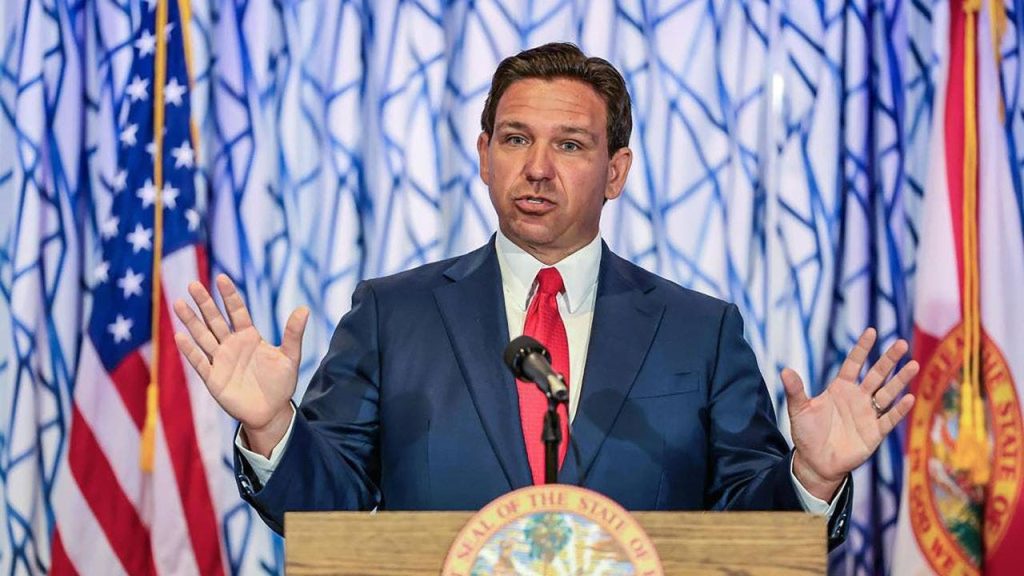
Florida Governor Ron DeSantis has asserted Monday that President Donald Trump’s recent executive order aimed at limiting state-level artificial intelligence laws will not deter the state from advancing its own AI safeguards.
Speaking at an event hosted by Florida Atlantic University, DeSantis emphasized Florida would continue pursuing legislation focused on consumer and child protections in the rapidly growing AI sector. He stated that even if interpreted broadly, the state’s initiatives align with federal objectives. “Even reading it very broadly, I think the stuff we’re doing is going to be very consistent,” he said. “But irrespective, clearly, we have a right to do this.”
The governor’s comments come as the Trump administration signals potential challenges against state AI regulations conflicting with federal policy. Last week, Florida lawmakers advanced legislation requiring human review of insurance claim denials generated by artificial intelligence. DeSantis has emerged as a vocal advocate for state oversight of AI while criticizing congressional proposals to impose a 10-year moratorium on state AI regulation.
Trump’s executive order, signed last week, contends that state-driven AI laws threaten innovation and economic growth by creating conflicting regulatory standards nationwide. The order states: “To win, United States AI companies must be free to innovate without cumbersome regulation.” It also warns that state-by-state regulation results in a “patchwork of 50 different regulatory regimes” and can lead to AI systems embedding ideological bias or regulating beyond state borders.
DeSantis acknowledged the possibility that Attorney General Pam Bondi could challenge Florida’s laws but expressed confidence in the state’s ability to withstand such actions. “I don’t know how successful [that] would be,” he said, “but the reality is I don’t anticipate it happening against any of the stuff we’re doing in Florida.”
Last week, DeSantis outlined recommendations for Florida lawmakers that would require companies to disclose when consumers interact with AI, ban the use of AI for therapy or mental health counseling, and expand parental controls over children’s AI usage. He also proposed restrictions on subsidies for data centers and limiting their access to local water resources. These proposals are expected to be addressed during Florida’s legislative session, which begins January 13, 2026.