Defense Bill Faces Critical Delay Amid GOP In-Fighting
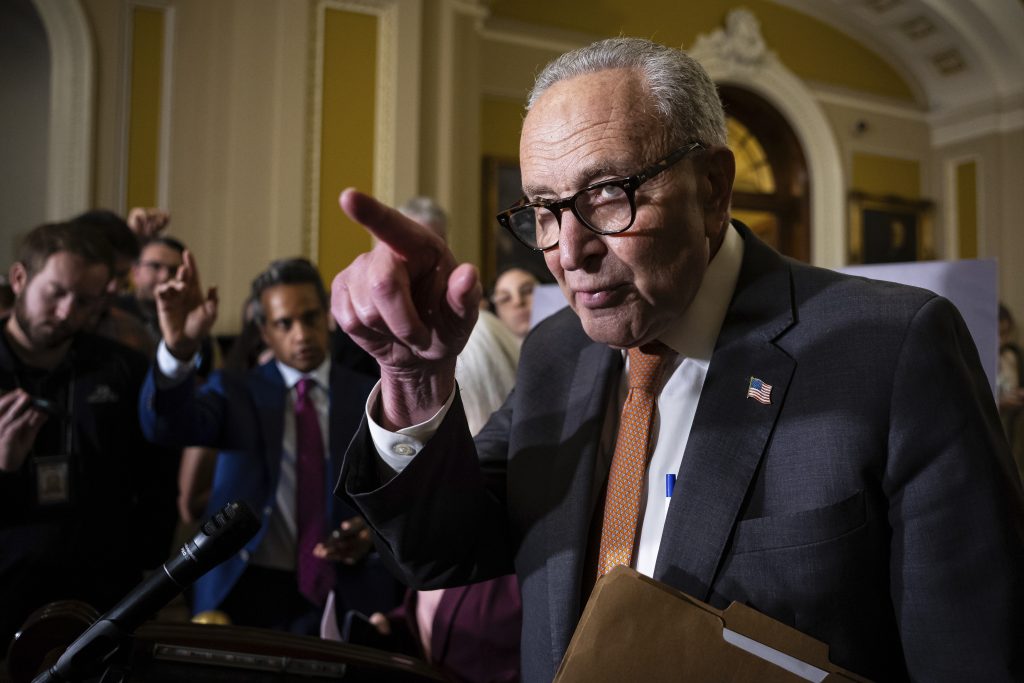
Senate Minority Leader Chuck Schumer (D-N.Y.) calls on a reporter during a press conference at the U.S. Capitol Sept. 16, 2025. (Francis Chung/POLITICO via AP Images)
The National Defense Authorization Act for fiscal year 2026 is facing a significant setback due to internal Republican disagreements over non-traditional Pentagon provisions. Originally scheduled for Thursday, Congress has delayed finalizing the crucial defense funding bill until “by the end of the weekend,” according to sources.
Key figures in both chambers confirmed that substantive work remains unfinished as party debates complicate negotiations. The most contentious issue centers on whether to include the Senate’s Renewing Opportunity in the American Dream to Housing Act (ROAD) amendment, aimed at easing housing costs for service members.
Rep. French Hill (R-Ark), chair of the House Financial Services Committee, has explicitly stated his panel hasn’t reviewed any text related to this addition and cannot support its inclusion until proper oversight is established. He emphasized the lack of review makes supporting it in the NDAA impossible.
The debate extends beyond housing with serious disagreements brewing over proposed restrictions on U.S. investments within China—a measure with major national security implications—and a plan to expand fertility benefits under TRICARE, including coverage for in vitro fertilization treatments for military families.
House Speaker Mike Johnson (R-La) voiced conditional backing of IVF access only if “sufficient pro-life protections are place.” Meanwhile, the measure regarding state-level artificial intelligence laws—a proposal supported by some Republicans—was already dropped after failing to gain enough traction.
With final passage now potentially delayed until late in the week and a narrow Republican majority controlling the House, lawmakers face challenges marshaling sufficient support for the must-pass defense bill if these contentious add-ons remain.