Congress Moves to Force Attorney General to Publish Epstein Documents or Face Contempt Charges
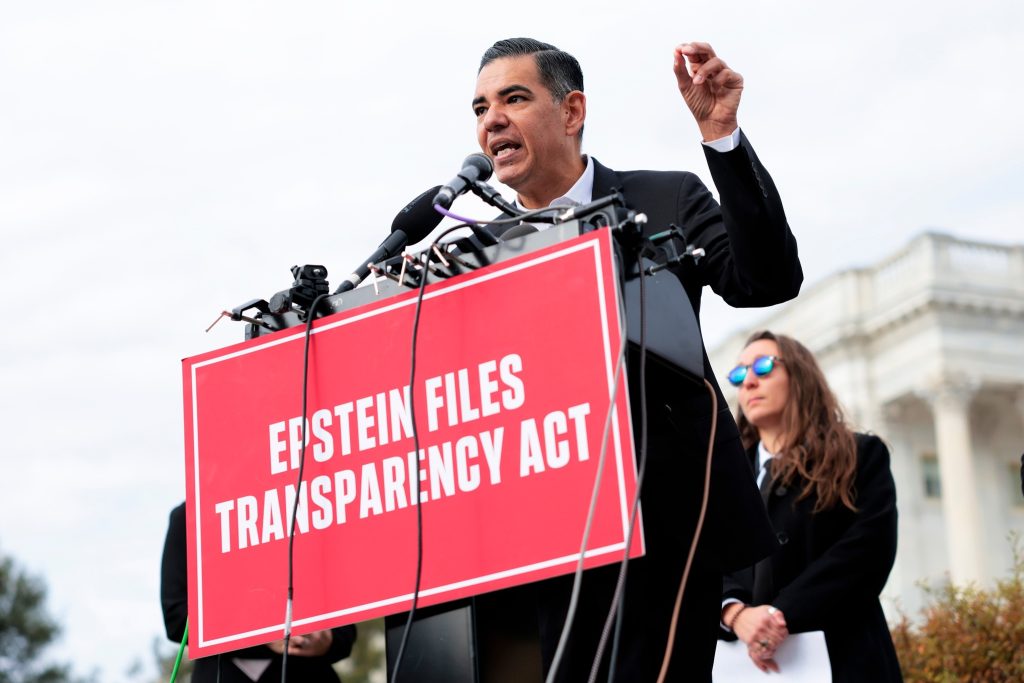
Congress members Rep. Ro Khanna (D-Calif.) and Rep. Thomas Massie (R-Ky.) have declared their readiness to escalate their bipartisan campaign for the Justice Department to fully release records tied to Jeffrey Epstein, potentially invoking Congress’s inherent contempt powers against Attorney General Pam Bondi over what they describe as unlawful delays.
Khanna detailed a proposed penalty framework, stating that if the department fails to publish the remaining materials mandated by the recently enacted Epstein Files Transparency Act, Bondi would be granted a 30-day grace period—though he noted she is already in violation of the law—with potential fines of up to $5,000 per day for each delay.
Khanna and Massie were lead sponsors of the legislation signed by President Donald Trump on November 19. The law requires the Justice Department to release unclassified documents related to Epstein while permitting limited exemptions, including victims’ personal information and materials that could jeopardize active federal investigations.
Tensions intensified after the Department began posting an initial batch of records near the deadline, with lawmakers and critics condemning the release as incomplete and overly redacted. Khanna and Massie have argued this rollout fell short of the law’s requirements and public expectations, citing excessive redactions and missing documents.
Massie has accused the department of disregarding the statute’s intent, while Khanna emphasized his goal is transparency and accountability—not personal retribution. “My goal is not to destroy Pam Bondi,” he said. “I didn’t know who Pam Bondi was.”
The Justice Department defended its handling of the files, stating that redactions and temporary removals were necessary to address concerns raised by victims’ rights groups and comply with court orders. In recent days, the department has restored at least one document after review.
Massie confirmed discussions are ongoing to utilize congressional contempt powers if compliance continues to be inadequate.