Congress at Risk of Permanent Loss of Authority as Trump Enters Second Term
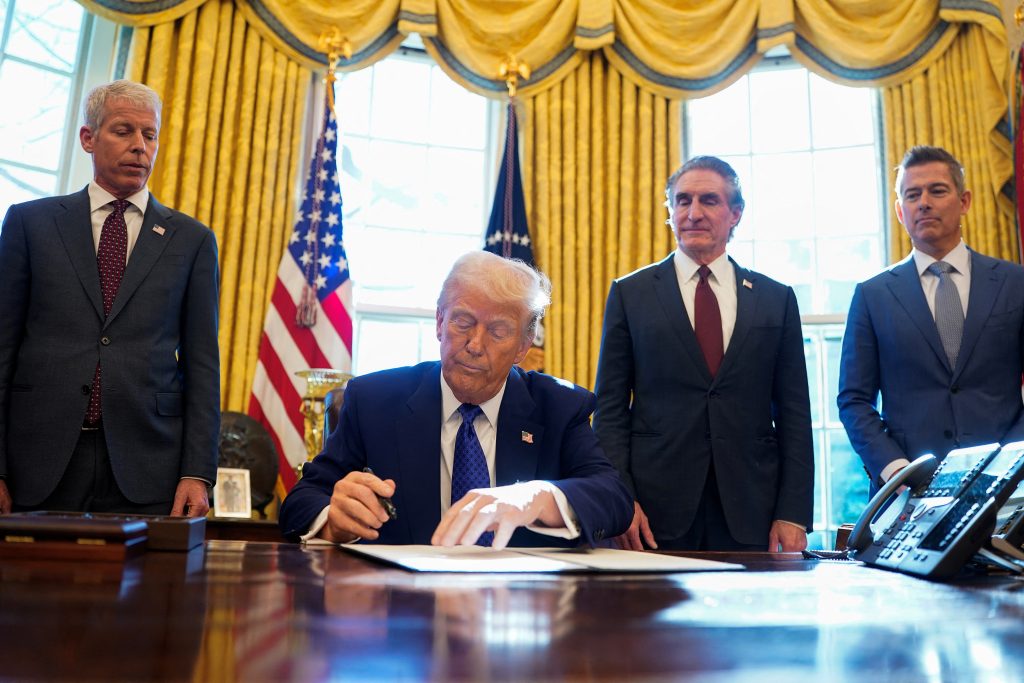
U.S. President Donald Trump signs an executive order, in the Oval Office, at the White House in Washington, D.C., U.S. February 14, 2025. REUTERS/Nathan Howard
By Jim Thomas | Friday, 02 January 2026 09:48 PM EST
Rep. Don Bacon, R-Neb., warned that Congress risks surrendering its constitutional role as President Donald Trump enters his second year in office. He said unchecked loyalty has left lawmakers sidelined as the White House drives policy on trade, spending, and military action.
Bacon, who is not seeking reelection this year, noted growing concerns ahead of next month’s midterms about whether Congress can reclaim authority it has steadily ceded to the executive branch under Trump. Despite Republican control of both chambers, oversight of the administration has been limited.
During Trump’s first year in office, the White House pushed forward with sweeping actions, including renaming the John F. Kennedy Center for the Performing Arts, withholding congressionally approved funds, asserting broad tariff authority traditionally held by Congress, and authorizing military strikes off the coast of Venezuela without legislative approval.
Bacon, one of the few Republicans openly critical of this dynamic, stated that the president would benefit from more resistance from his own party. “The president would be better off if the Republican House pushed back more,” he said. “I think his tariff policy would be better. I think it would be better on Ukraine.”
He added that Congress’s structure puts it at a disadvantage when confronting an aggressive executive branch: “You have 435 members of Congress. We are not going to be nearly as fast as the president.”
White House officials maintain Trump has acted within the law, arguing voters elected him with a mandate for decisive action. Critics in both parties, however, claim the administration increasingly treats Congress as an afterthought.
Democrats have moved to block or delay spending bills over unilateral executive actions, including dismantling a federal climate center in Boulder, Colorado, and vetoing a water project with bipartisan support. Some Republicans are exploring procedural tools like discharge petitions to bypass leadership and force votes on issues outside the White House’s priorities.
With another government funding deadline approaching Jan. 30, appropriators are weighing whether to challenge Trump directly—potentially testing how far Congress is willing to go to reassert its role. Bacon cautioned that if lawmakers “end up rolling over” for such actions, it would likely repeat with each new administration.