Iran Celebrates Death of Supreme Leader Khamenei, Opponents Forecast Regime Collapse
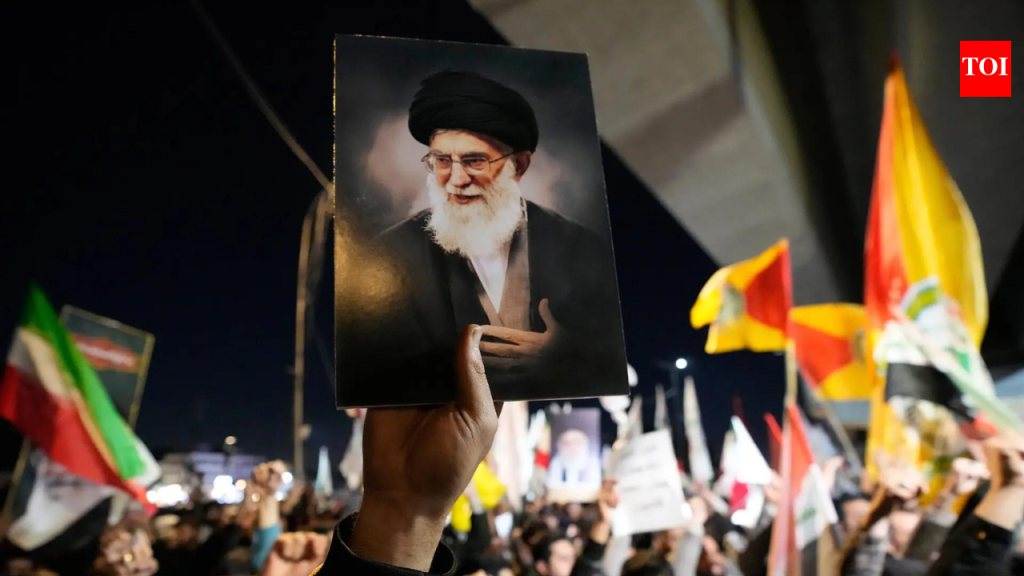
Amir Fakhravar, a member of the U.S.-based National Iranian Congress, stated that celebrations have erupted across Iran following the death of Ayatollah Ali Khamenei. He also predicted the end of the country’s Islamic regime and a new alliance among Iran, the United States, and Israel.
“ heating for years, it was a celebration all over Iran and all over the world,” Fakhravar said in an interview. “For years, we have been saying that 98% of the country is against this regime. These are the very small layer of fanatic mullahs who occupied our country.”
Fakhravar described the regime as an occupying force and credited President Donald Trump with bringing about a decisive change. “Right now, the thing President Trump, the 47th president of the United States, has done, he just ended the life of a monster, Ali Khamenei, and he ended the era of Islam and the Quran in Iran,” Fakhravar said. “You will see that Iran is not an Islamic country anymore.”
He predicted a dramatic transformation in Iran’s global posture: “You will see how it will develop into something totally different. And we will be the best friend of the United States and Israel in the world.”
Fakhravar dismissed statements from Iranian state media as unreliable, noting officials initially denied reports of Khamenei’s death. “If you are following the news yesterday for maybe 18 hours, they were denying. They were saying, yeah, President Trump is lying. As always, supreme leader is not dead,” he said. “And in an hour they said, oh, you know what? Yes, supreme leader is dead.”
Fakhravar called on Trump to convene Iranian opposition leaders to draft a new constitution modeled on the U.S. Constitution, comparing the proposal to Gen. Douglas MacArthur’s role in postwar Japan. “President Trump needs to do that,” he said. “And we are ready. We, the opposition leaders, we are ready to just come and sit around the table when President Trump is calling us.”
In a separate interview segment, retired Army Lt. Col. Tony Shaffer, president of Project Sentinel, described military operations as signaling a shift in modern warfare. He highlighted the use of one-way attack drones by U.S. Central Command: “I was speaking to some of the folks involved in this program, and they’ve been preparing for this for the last three weeks, and they were ready to launch,” Shaffer said. “For the record, for those who are watching, who may oppose us, this is not the only new and innovative technology we have. There’s a lot we haven’t shown.”
Shaffer added that war is rapidly evolving: “We recognize that the battlefield is changing and we need to change and adapt to the battlefield.” He described a drone strike targeting a radar system: “That right there was a small-aperture drone being flown into the radar there and destroyed instantly. They’re inexpensive. The cost of that drone was probably about 1/100 of that radar we just destroyed.”
Shaffer also framed developments within a broader historical context: “We’re using high technology to right the wrongs of the 1970s,” he said. “This all started under Jimmy Carter, [Zbigniew] Brzezinski. We are now past this era of essentially allowing a country to be the terrorist of the Middle East and putting, hopefully, them on the path of recovery with the rest of the world to be our friend.”