ICE Training Program Criticized as ‘Deficient’ by Ex-Employee
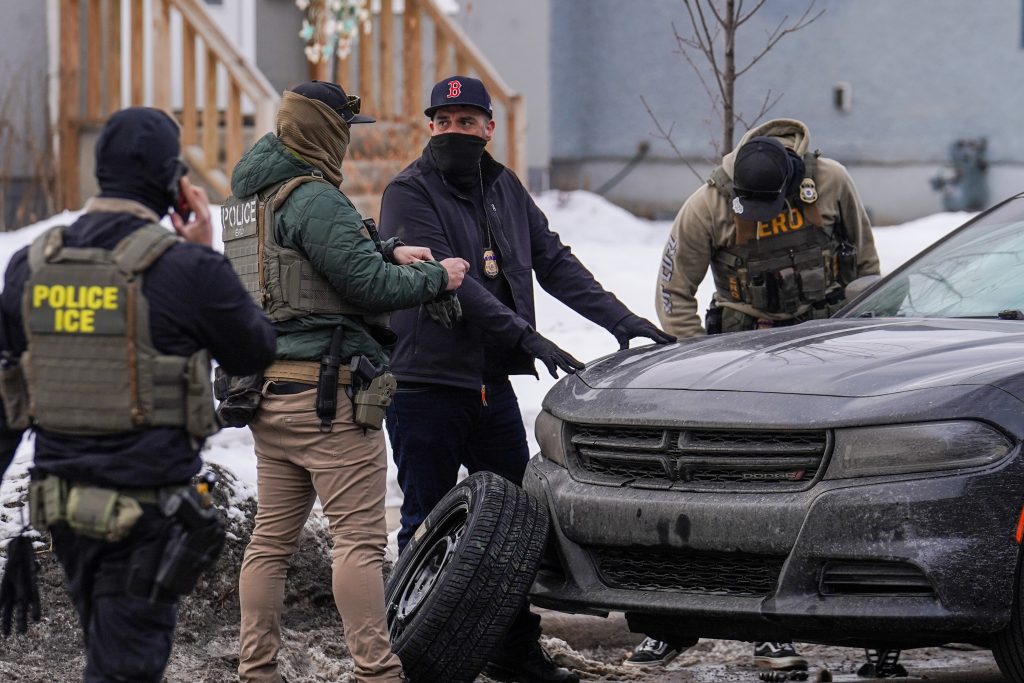
Federal agents tend to a vehicle with a flat tire while conducting immigration enforcement operations, Thursday, Feb. 5, 2026, in Minneapolis. (AP Photo/Ryan Murphy)
By Jim Mishler
Monday, February 23, 2026
Ryan Schwank, an attorney who resigned from U.S. Immigration and Customs Enforcement earlier this month, testified at a hearing organized by Sen. Richard Blumenthal, D-Conn., and Rep. Robert Garcia, D-Calif., that the agency’s accelerated hiring efforts risk producing new recruits lacking adequate preparation.
“New cadets are graduating from the academy, despite widespread concerns among training staff that even in the final days of training, the cadets cannot demonstrate a solid grasp of the tactics or the law required to perform their jobs,” Schwank said.
“Without reform, ICE will graduate thousands of new officers who do not know their constitutional duty, do not know the limits of their authority, and who do not have the training to recognize an unlawful order,” he added.
Schwank was hired by ICE in 2021 and remained with the agency after President Donald Trump began his second term. He resigned on February 13. During the hearing, Schwank described ICE’s Basic Immigration Enforcement Training Program as “deficient, defective, and broken,” alleging the agency has reduced training time for new recruits.
The Department of Homeland Security, which oversees ICE, denied any elimination of training requirements. In a statement, DHS asserted it streamlined training to cut redundancy and incorporate technology advancements without sacrificing core content. “Under these new improvements,” the department said, “candidates still learn the same elements and meet the same high standards ICE has always required. No subject matter has been cut.”
DHS confirmed its curriculum includes multiple classes dedicated to use-of-force policy and proper use of force. At a recent congressional hearing, acting ICE Director Todd Lyons stated recruits with prior federal law enforcement experience are placed in shorter programs focused on immigration law and ICE-specific training.
According to documents referenced in the reporting, ICE expects approximately 4,000 recruits to graduate by September and more than 3,000 new enforcement officers to complete training by June. The administration plans to hire 10,000 officers using funding from the One Big Beautiful Bill Act.