U.S.-Nigeria Alliance: The Turning Point in West Africa’s Counter-Terror Efforts
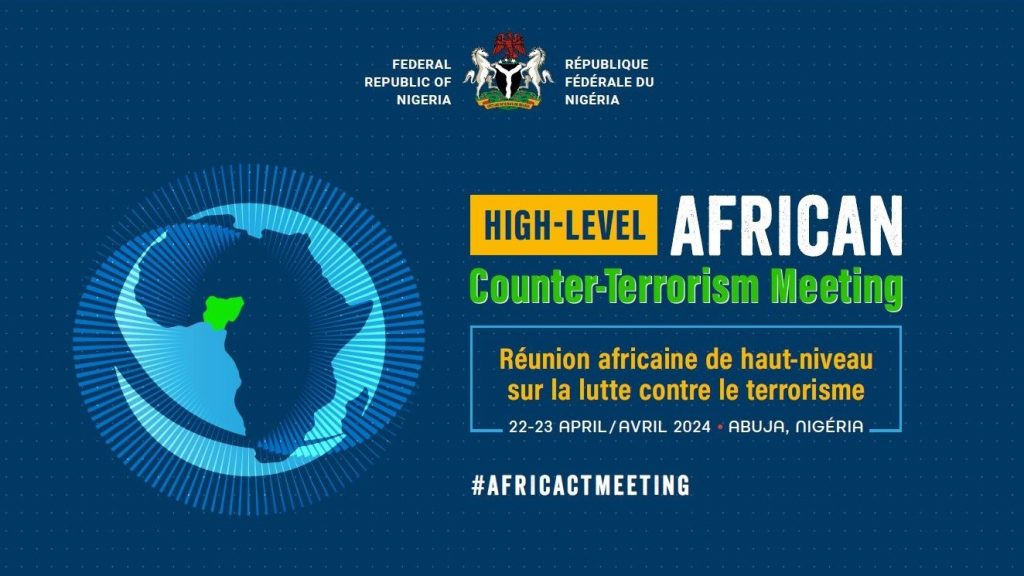
American forces have recently deployed for a significant counterterrorism operation in Nigeria, underscoring that over ten years, the continent’s largest nation has been at the epicenter of an escalating terror campaign.
Extremist attacks have caused widespread devastation in Nigeria, including mass abductions of schoolchildren and the destruction of churches, mosques, and farming villages, destabilizing vast regions of the country and sending shockwaves across West Africa.
Groups such as Boko Haram and its offshoot, Islamic State West Africa Province (ISWAP), have demonstrated both ideological fanaticism and operational adaptability.
This conflict represents more than Nigeria’s internal struggle. It is a critical test for whether sovereign nations can overcome transnational terror networks that exploit poverty, porous borders, and weak governance.
Increasingly, the partnership between Nigeria and the United States offers a model for successful collaboration — if pursued with seriousness, accountability, and strategic clarity.
Nigeria faces complex security challenges across multiple regions. In the northeast, remnants of Boko Haram and ISWAP continue asymmetric attacks despite sustained military pressure. In the northwest, armed banditry and kidnapping-for-ransom have evolved into quasi-insurgent movements. Meanwhile, in the Middle Belt, farmer-herder violence intersects with extremist infiltration.
The result is a multifaceted security landscape that requires more than brute force to address.
The United States has long recognized Nigeria as a strategic anchor in West Africa. With over 200 million citizens and the continent’s largest economy, Nigeria’s stability is vital for regional trade, energy production, and democratic governance. American security assistance — including intelligence sharing, counter-IED training, logistical support, and equipment sales — has expanded significantly under both Republican and Democratic administrations. These initiatives have designated Boko Haram as a Foreign Terrorist Organization and maintained security cooperation with Abuja.
However, hardware alone cannot defeat insurgency. The most promising dimension of Nigerian-American collaboration lies in professionalizing institutions and advancing institutional reform. Effective counterterrorism requires disciplined forces that respect civilian populations, transparent procurement systems that ensure funds reach frontline units, and judicial mechanisms capable of prosecuting captured militants while safeguarding due process.
Training programs emphasize human rights compliance, community engagement, and rule-of-law frameworks — essential for undermining extremist recruitment narratives. Joint exercises build interoperability and strengthen command-and-control capacity, while intelligence cooperation enhances Nigeria’s ability to track financing networks and disrupt cross-border arms flows.
Equally critical is addressing the economic and environmental conditions that extremists exploit. Northern Nigeria faces chronic poverty, youth unemployment, and land-use conflicts exacerbated by desertification. Targeted development initiatives — agricultural modernization, small business financing, infrastructure repair — complement security operations by reducing the pool of vulnerable recruits.
American companies bring expertise in energy infrastructure, digital connectivity, and agricultural technology. When paired with anti-corruption safeguards and local accountability, such investments strengthen the social fabric extremists seek to dismantle.
Diplomatically, consistent high-level engagement matters. Nigeria’s leaders must know that Washington views their success against terror as a shared strategic imperative. At the same time, American policymakers must insist on measurable outcomes — security assistance should be performance-based with clear benchmarks for territorial control, civilian protection, and prosecution of terror financiers.
Critics sometimes question whether Nigeria’s internal divisions — ethnic, religious, and political — undermine long-term counterterrorism prospects. Yet Nigeria has repeatedly demonstrated resilience through peaceful power transitions, an active civil society, and a vibrant media landscape.
If Nigeria falters, extremist networks could expand into coastal West Africa, threatening global shipping lanes in the Gulf of Guinea and destabilizing key U.S. partners. But if Nigeria succeeds, it will send a powerful signal that democratic nations can defeat jihadist insurgencies without sacrificing sovereignty or liberty.
Strategic patience, principled partnership, and accountability must guide this engagement. For Nigeria’s leaders, sustained reform and unity of purpose are indispensable.