Democrats Surpass 2024 Baseline in Special Elections as Trump’s Absence from Ballot Raises Republican Alarm
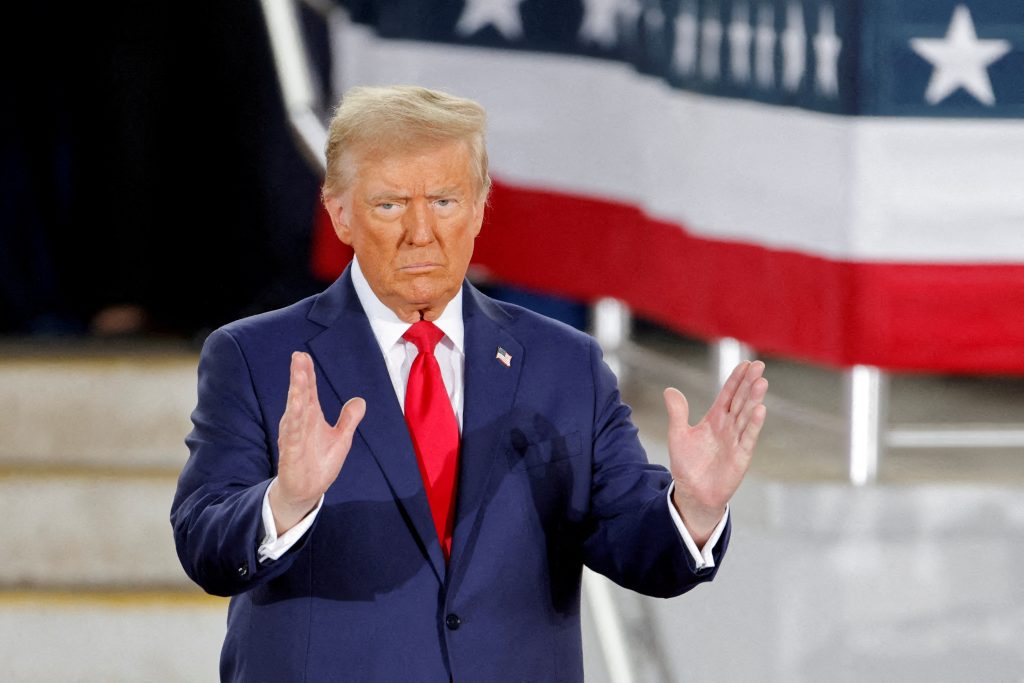
FILE PHOTO: Republican then-presidential candidate and former U.S. President Donald Trump gestures during a campaign event at Dorton Arena, in Raleigh, North Carolina, U.S. November 4, 2024. REUTERS/Jonathan Drake/File Photo
With President Donald Trump no longer on the ballot for the upcoming midterms, Republicans are growing increasingly alarmed by a pattern emerging in special elections and down-ballot contests across the country. Democratic candidates have consistently outperformed their 2024 baseline results—even in districts where Trump carried comfortably.
In 20 state legislative districts that held special elections this year, Democrats achieved an average of 10.5 percentage points above their 2024 numbers. Additionally, Democrat candidates exceeded former Vice President Kamala Harris’ 2024 performance by an average of 13.9 points in 67 state House and Senate races last year.
Republican internal polling aligns with public surveys indicating a decline in support for GOP candidates in certain regions. Many Republicans attribute the turnout concerns to a single factor: Trump will not appear on the ballot in 2026 or again until 2028.
Some strategists report that recent controversies have discouraged portions of Trump’s base while energizing Democrats and anti-GOP independents. One example cited is the administration’s reluctance to release additional Epstein files, an issue that has drawn significant attention among Trump’s most engaged supporters.
Polling also shows dissatisfaction with Trump’s immigration policies and economic concerns. Several special election results have exacerbated these worries.
On January 31, Democrats flipped a North Texas-based state Senate seat. Democrat Taylor Rehmet won by 14 points in a district Trump carried by 17 points in 2024.
Then on February 7, Democrat Chasity Verret Martinez secured a South Louisiana state House district with a 24-point landslide margin—Trump had won that same district by 13 points in 2024.
Even in races Republicans still won, the margins have narrowed sharply. On February 10, a Republican won a conservative north-central Oklahoma state House district by 28 points, though Trump carried it by 58 points in 2024.
A GOP operative described the pattern: “There is at least a current 10-point Democratic over-performance from Trump 2024 — and it’s built on a fired-up Democratic base and a sleepy GOP base.”
Not all Republicans view these results as a major shift. Some caution that low-turnout special elections often hinge on local issues and do not always translate to national midterm outcomes.
Mason Di Palma, communications director for the Republican State Leadership Committee, stated: “Let’s not pretend a couple of low-turnout special elections suddenly signal a political earthquake.”
Still, Republicans acknowledge the stakes. While appearing on Newsmax in January, veteran pollster Patrick Allocco warned GOP voters against complacency, emphasizing that Democrats’ anger and motivation often drive turnout in midterm elections.
By Charlie McCarthy | Thursday, 19 February 2026 12:49 PM EST