Congressman Downing Calls Trump’s Middle East Peace Initiative ‘An Incredible Legacy’
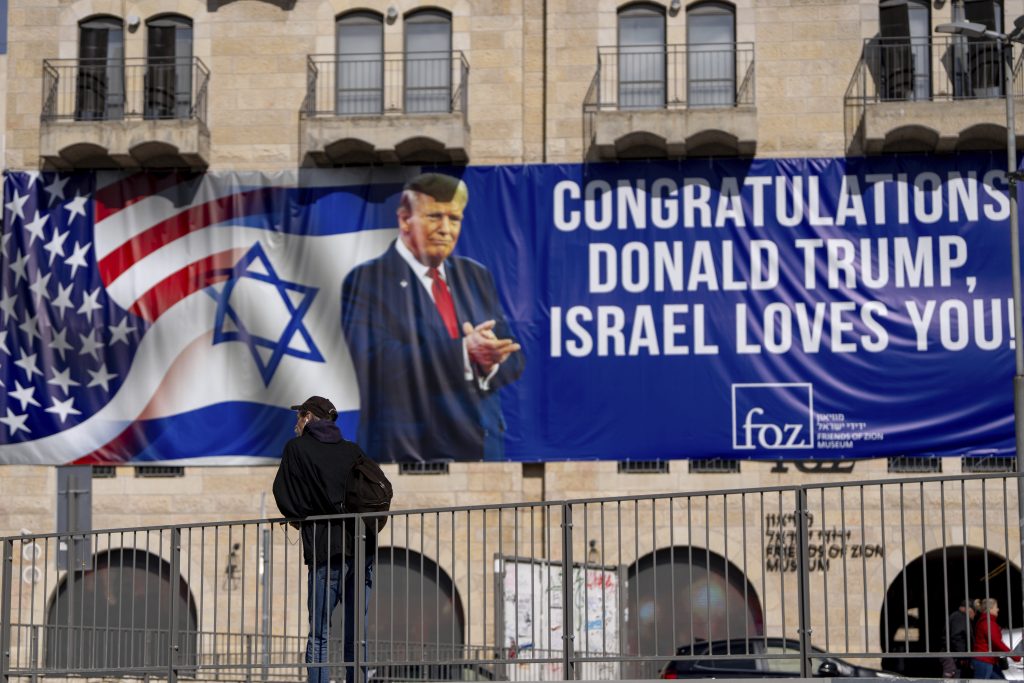
A billboard congratulating U.S. President-elect Donald Trump in Jerusalem on Inauguration Day, Monday, Jan. 20, 2025. (AP Photo/Ohad Zwigenberg)
Rep. Troy Downing of Montana praised President Donald Trump’s efforts to broker peace in the Middle East during a recent interview. Downing described the Board of Peace initiative as “an incredible legacy for this administration.”
In his remarks, Downing emphasized that while diplomatic progress has been significant, humanitarian concerns must remain at the forefront. “We can’t ignore the humanitarian needs,” he stated, noting these requirements are extensive.
Downing added that efforts must distinguish between civilians and Hamas, insisting, “We need to make sure that we’re separating the people and those needs from Hamas, and Hamas needs to disarm.” He stressed the importance of addressing critical infrastructural needs such as food and medicine to minimize human suffering in the region.
Downing reiterated his support for the administration’s diplomacy, stating, “I’m just going to re-emphasize what an incredible legacy for this administration to have gotten us so close to actually brokering a peace deal.”
When responding to criticism that the Board of Peace concentrates power and serves as an alternative authority structure, Downing dismissed such concerns. “There’s always going to be naysayers,” he said, adding that if Trump had brokered a cure for cancer, someone would find a way to support it.
He also argued that regional instability under Hamas’ control has undermined democratic processes. “The instability in this region and having Hamas really take over and be the spokesperson and the de facto government of that region, we’re not really talking about any kind of democratic process here,” Downing said. “I think that that’s been a huge problem.”
Furthermore, Downing asserted that global institutions must be held accountable, noting, “We need to continue to put our pressure on making sure that the United Nations is being receptive to real issues and that we do have that seat at the table.”