ICE-Local Law Enforcement Agreements Soar 950% Under Trump’s Second Term
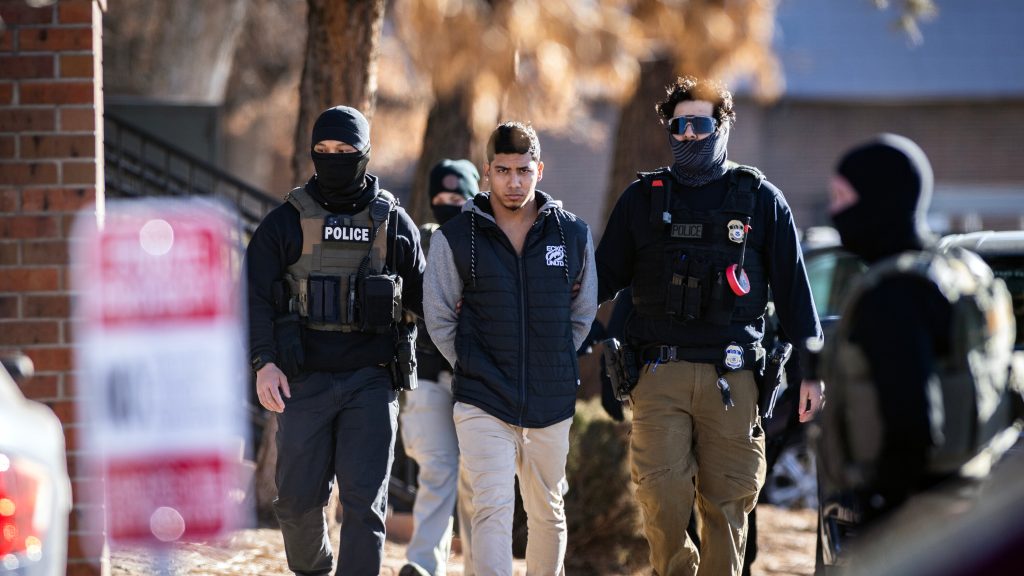
Agreements between U.S. Immigration and Customs Enforcement (ICE) and local law enforcement that permit officers to make federal immigration arrests have surged by 950% in the first year of President Donald Trump’s second term, according to a new analysis of ICE data.
As of January 26, 1,168 agencies now have officers trained to assist ICE. This represents an increase from 135 agencies under the Biden administration and 150 at the end of Trump’s first term, according to an analysis by FWD.us, a group that advocates for immigration and criminal justice reforms.
The Trump administration has revived and expanded the so-called “task force” model, also known as the 287(g) program, which deputizes local officers to enforce federal immigration law.
ICE states that these partnerships are essential to protecting communities and upholding immigration laws, calling cooperation with state and local agencies critical to carrying out its mission.
Under the program, local officers receive training and, in some cases, federal funding incentives. ICE has offered up to $7,500 per trained officer for equipment, $100,000 for vehicles, and overtime pay assistance.
FWD.us estimates that local agencies could receive between $1.4 billion and $2 billion this year under Trump’s broader immigration funding initiatives.
States with the highest number of agreements include Florida (342), Texas (296), Tennessee (63), Pennsylvania (58), and Alabama (52), according to NBC News.
Supporters argue that the expansion empowers local communities to crack down on criminal illegal immigrants and reduces strain on federal resources.
Louisiana Republican Governor Jeff Landry recently issued an executive order directing state agencies to cooperate with federal immigration operations, even as some local leaders in New Orleans expressed hesitation.
Critics warn of overreach. NBC News reported that some departments, including the Dallas Police Department, declined to participate due to concerns that officers would be diverted from core public safety duties. Officials in Montgomery County, Maryland, stated they would not enforce civil immigration orders without judicial warrants.
The Guardian recently reported that some local police departments are using school district license plate reader systems to assist federal immigration investigations. Audit logs reviewed by The 74 show that officers across multiple states conducted immigration-related searches using camera networks that include devices installed by school systems.
Flock Safety, the company behind many of these cameras, states it does not provide direct access to federal authorities and that data-sharing decisions are made by local customers. Law enforcement officials quoted in The Guardian defended the use of such systems as part of broader public safety cooperation.
An NBC News Decision Desk Poll found that 60% disapprove of Trump’s immigration handling following recent high-profile enforcement incidents, though 40% approved — including 27% who strongly approved — reflecting enduring support among voters who prioritize border security.
With 39 states now participating in ICE’s expanded partnership model, the administration’s approach marks one of the most aggressive federal-local immigration enforcement collaborations in years. Supporters say it restores law and order, while critics argue it raises civil liberties concerns.