Trump Administration Proposes Global Price Floors for Critical Minerals to Counter Chinese Dominance
By Sam Barron | Wednesday, 04 February 2026 06:56 PM EST
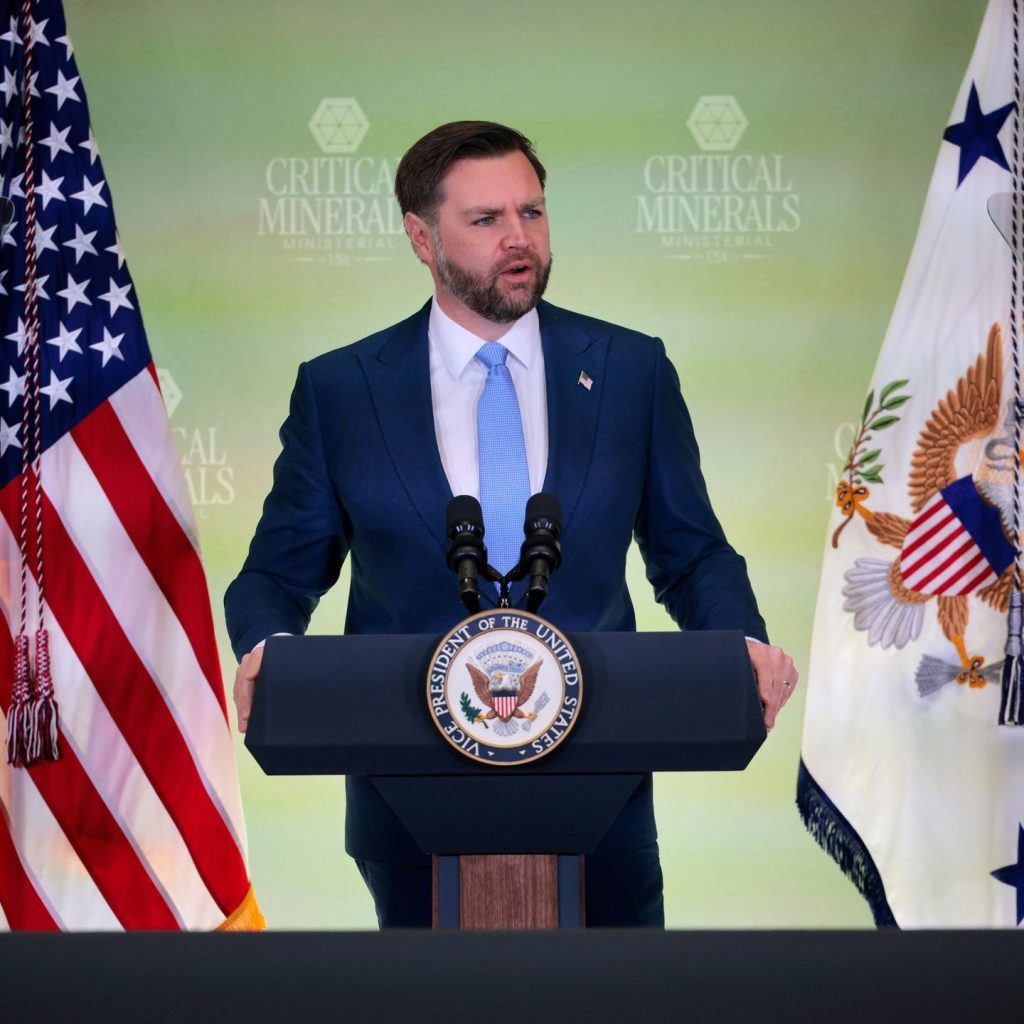
Vice President JD Vance announced the Trump administration’s plan to establish a preferential trade zone for critical minerals, featuring enforceable price floors designed to stabilize global markets and reduce external disruptions. Speaking at the Critical Minerals Ministerial Meeting held at the State Department on Wednesday, Vance described the mechanism as “a necessary foundation for private financing and secure access to the critical mineral supplies” required in emergencies.
The initiative follows President Donald Trump’s recent launch of Project Vault, a strategic stockpile of critical minerals backed by $10 billion from the U.S. Export-Import Bank and $2 billion in private funding. More than 50 countries attended the meeting aimed at diversifying their access to essential materials and countering China’s growing influence over global supply chains.
China has long leveraged its control over mineral processing as geo-economic leverage, curbing exports and suppressing prices to hinder other nations’ efforts to diversify sources of materials critical for semiconductors, electric vehicles, and advanced weapons. Representatives from South Korea, India, Thailand, Japan, Germany, Australia, and the Democratic Republic of the Congo participated in the gathering.
Interior Secretary Doug Burgum reported that 11 additional countries will join the U.S.-led critical minerals trade club this week, expanding the coalition to include the United States, Australia, Japan, South Korea, Saudi Arabia, and Thailand. He noted that 20 more nations showed “strong interest” in membership.
The administration previously established a price-floor agreement with rare-earths producer MP Materials but has reportedly shifted toward broader international frameworks, moving away from company-specific deals. Washington’s Group of Seven partners and the European Union have also explored similar measures to incentivize rare earth production through price floors and targeted taxes on Chinese exports.
Australia, positioning itself as an alternative to China in critical minerals, plans to establish a strategic reserve of minerals by mid-2026.
Sam Barron has almost two decades of experience covering a wide range of topics including politics, crime and business.