Record U.S. Murder Drop in 2025 Credited to Trump’s Law-and-Order Push
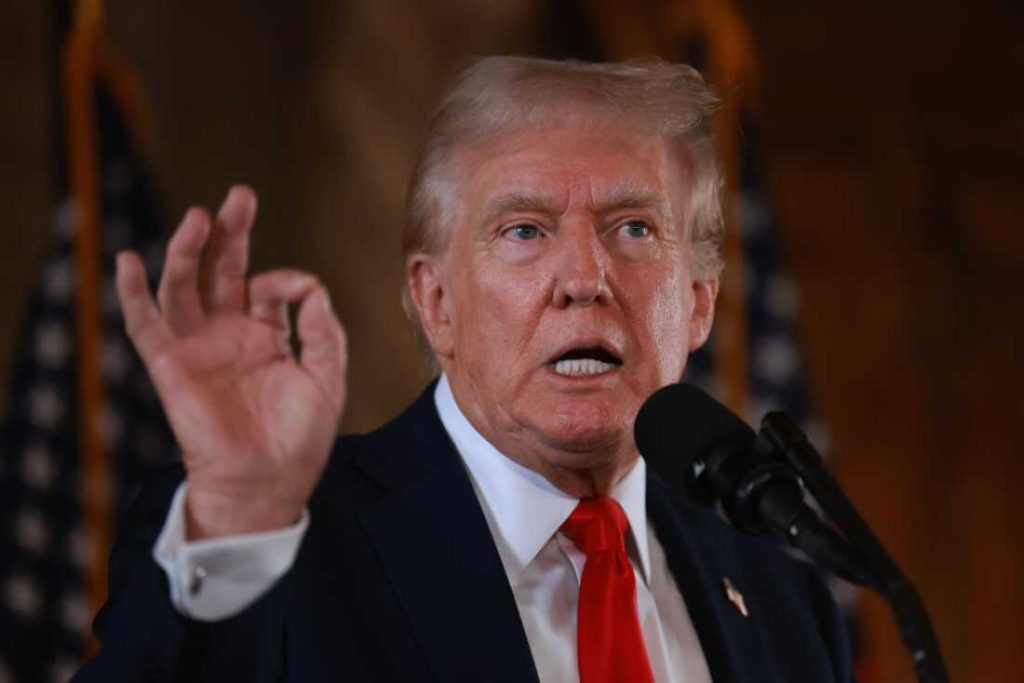
PALM BEACH, FLORIDA - AUGUST 08: Republican presidential candidate former President Donald Trump speaks during a press conference at Mr. Trump's Mar-a-Lago estate on August 08, 2024, in Palm Beach, Florida. Polls currently show a close race between Trump and Democratic presidential candidate, U.S. Vice President Kamala Harris. (Photo by Joe Raedle/Getty Images)
FBI Director Kash Patel on Thursday attributed what he called the largest single-year decline in U.S. homicides to President Donald Trump’s law-and-order agenda, citing a report released by the Council on Criminal Justice that documented a sharp drop in gun violence during 2025—the first full year of Trump’s second term.
The nonpartisan think tank’s analysis revealed a 21% decrease in homicide rates across 35 U.S. cities compared to 2024, translating to an estimated 922 fewer killings nationwide. The report tracked 13 categories of crime and identified declines in 11 of them, including aggravated assaults, carjackings, and shoplifting. Vehicle theft fell by 27%, while shoplifting dropped 10%. Drug-related crimes showed a slight increase, and sexual assaults remained flat year-over-year.
Patel highlighted intensified federal enforcement efforts as the driving force behind the decline, emphasizing operations targeting fugitives, repeat violent offenders, and gang networks. He accused some news organizations of downplaying the administration’s impact and noted a substantial rise in arrests under Trump’s public safety strategy. Patel also pointed to Operation Summer Heat—a summer crackdown he claims has led to thousands of arrests and gun seizures with state and local agency cooperation—as a key component of this progress.
Researchers from the Council on Criminal Justice and external experts cautioned that isolating a single cause for the drop is complex, given the widespread nature of the decline and its progression through years of crime volatility following the COVID-19 pandemic. Homicides had surged in many areas during 2020 and 2021 before gradually easing, with analysts noting factors such as local policing tactics, community violence intervention programs, shifts in routine activity, and changes in gun and drug markets contributing to the trend.
The report acknowledged limitations in its scope, including the exclusion of Jackson, Mississippi, and Birmingham, Alabama—two cities with among the highest per-capita homicide rates—in its city sample. Critics warned that such omissions could misrepresent national crime patterns if readers assume the findings reflect all high-violence jurisdictions. In Washington, D.C., the report identified one of the nation’s largest year-to-year homicide drops, with federal officials citing task force operations and illegal gun enforcement efforts alongside local initiatives focused on violence prevention.
Researchers emphasized that crime trends can reverse rapidly and cautioned it is too early to determine whether the 2025 decline will persist into 2026.