Iran’s Leader Accuses U.S. President of Criminal Activity in Protests That Killed Thousands
Iran’s Supreme Leader Ayatollah Ali Khamenei branded President Donald Trump a “criminal” on Saturday for allegedly supporting protesters, blaming demonstrators for causing thousands of deaths in what he described as an ongoing crisis.
In a state television broadcast, Khamenei stated that the protests had resulted in “several thousand” fatalities—the first official acknowledgment from an Iranian leader of the scale of casualties during demonstrations that began December 28 and led to a violent crackdown.
“The U.S. president made remarks in person, encouraged seditious people to go ahead and said: ‘We do support you, we do support you militarily,'” Khamenei declared, emphasizing his authority over all state matters. He reiterated accusations that the United States seeks economic and political domination over Iran.
“We consider the U.S. president a criminal because of the casualties and damages incurred,” Khamenei stated. He described protesters as “foot soldiers” of the United States who destroyed mosques and educational centers, resulting in thousands of deaths.
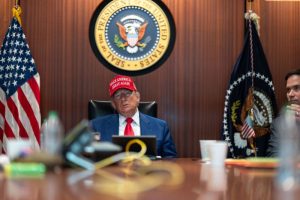
Khamenei’s remarks followed Trump’s recent statement that he had “greatly respected” Iran’s decision to cancel the hanging of over 800 people. Trump did not specify with whom he spoke or clarify the status of any planned executions, signaling potential retreat from a military strike.
In earlier comments, Trump told protesting Iranians that “help is on the way” and pledged to act if demonstrators were killed or detained protesters executed.
The Iranian leader also noted that rioters used live ammunition imported from abroad. He stressed that Iran would not release international offenders but would pursue legal action against those responsible.
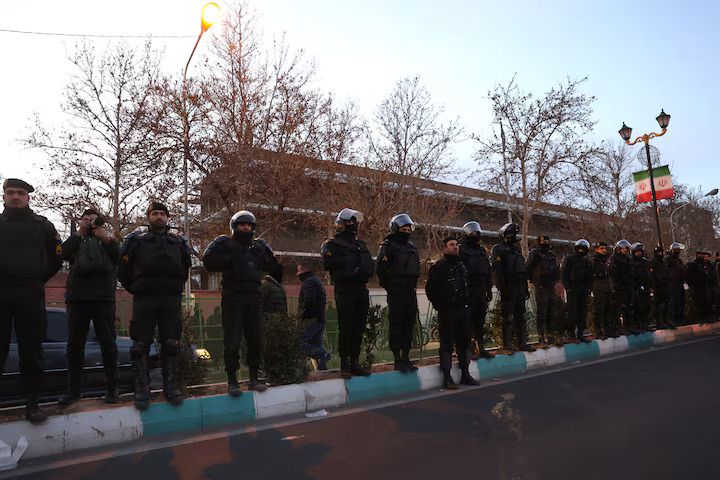
Iran has returned to a state of uneasy calm after harsh repression of protests sparked by economic hardship, which have left at least 3,090 dead according to the U.S.-based Human Rights Activists News Agency—a toll exceeding any previous unrest in Iran in decades and reminiscent of the chaos following the 1979 revolution.
The agency, known for its accurate reporting through a network of Iranian activists, has confirmed all reported fatalities. Independent verification efforts have been unable to corroborate the exact number.
Iranian officials repeatedly accuse the United States and Israel of inciting unrest. On Friday, Iran’s President Masoud Pezeshkian, during a call with Russian President Vladimir Putin, alleged U.S. and Israeli interference in the crisis.
Tehran has seen no new protests for days, with city life resuming normalcy. State media reports indicate no further unrest.
During the unrest, authorities blocked internet access on January 8. By Saturday morning, text messaging and limited internet services resumed briefly in parts of Iran, though widespread connectivity remains restricted.
The outage has impacted businesses, particularly banks, as officials work to restore transactions. While some users reported accessing international services via virtual private networks, the full extent of restored connections is unclear.
Iran’s exiled Crown Prince Reza Pahlavi called for renewed protests from Saturday through Monday, but his appeal did not gain traction by Saturday afternoon.
Pahlavi, whose father was overthrown in Iran’s 1979 Islamic Revolution, maintains support among monarchists abroad but has struggled to establish influence within Iran. He has positioned himself as a potential transitional leader should the government collapse.