US Affordability Crisis Deepens as Inflation Stalls and Social Security Threatens Millions
“Affordability” has become the new hot topic in U.S. politics.
Surveys and analysis repeatedly show that households feel squeezed by prices for basics like rent, food, energy, childcare, and healthcare.
This has translated directly into voter anger and distrust of political leadership.
This issue really gained legs in the immediate aftermath of the COVID-19 shock and Joe Biden’s election as president.
Many factors, such as supply chain disruptions that could not be controlled, arose to contribute to price increases.
However, a study by MIT suggests that the largest contributing factor was one that could be controlled — government spending.
Although a certain level of stimulus spending was necessary during the pandemic, many believe the government under Biden pumped so much money into the economy that it led to a worker shortage because many chose to live off stimulus funds instead of working.
When this was combined with supply chain issues, increased demand, and other issues, it led to rapidly rising prices, a.k.a. inflation, which peaked in 2022.
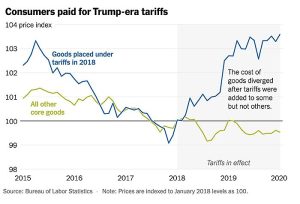
The problem with this is that prices remained high even as annual inflation began to fall.
In other words, prices did not go back down, instead they plateaued at a much higher level.
This means many families still face permanently higher grocery, fuel, and services costs than before the pandemic, while their paychecks have not kept up in real terms.
Rising housing costs have been an important part of the affordability squeeze.
There are also multiple causes of this, some of which were worsened by government policy. One example is that excessive government spending led the FED to raise interest rates, which not only raised prices for potential homebuyers, it also led to increased rental demand, leading to higher prices for renters.
Additionally, open border policies contributed to the problem by further burdening an already tight housing market.
A 2025 HUD report found that in states like California and New York, Biden’s border crisis accounted for 100 percent of all rental price growth and over one-half of all growth in owner-occupied housing in recent years. Nationwide, the foreign-born population accounted for two-thirds of rental demand growth.
As noted earlier, affordability pressures are not limited to housing.
Analyses of the broader costs of living highlight that prices for food, childcare, healthcare, and utilities have all risen significantly compared with pre-pandemic levels, creating an “affordability crisis” that extends across multiple budget categories.
A CBS breakdown of the issue notes that even as inflation slows, families still struggle to pay basic bills and feel pessimistic about their financial future because the baseline price level is so much higher than it was just a few years ago.
Taken together, the last five years have brought about a structural shift: what once sounded like a narrow economic concern — affordability — has become a buzzword to summarize the broad sense that the economic system is not delivering a decent standard of living for many people.
Persistent high housing costs, elevated prices for essentials, and stagnant real wages have turned affordability into a central test by which voters judge governments and parties. That is why it is now a major political issue rather than just a background economic statistic.