Trump Administration Signals Cuba as Next Target for ‘Hard Leverage’ Strategy
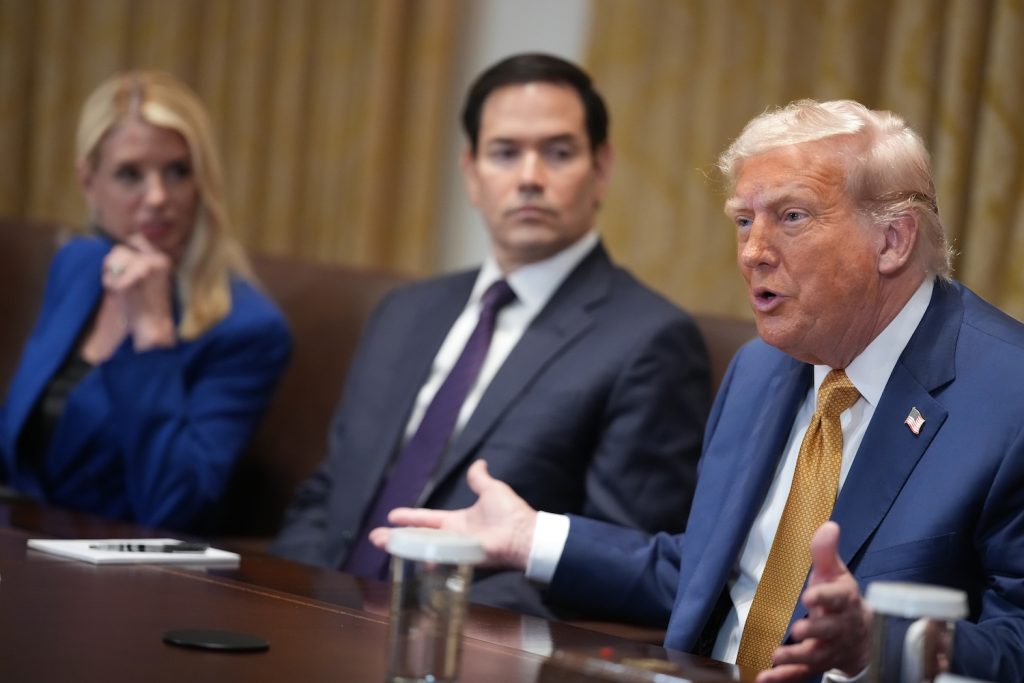
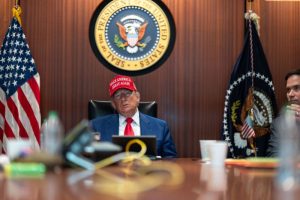
WASHINGTON, DC - JULY 08: U.S. President Donald Trump speaks to members of the press during a Cabinet Meeting at the White House on July 08, 2025 in Washington, DC. Trump discussed the recent flash flooding tragedy in Central Texas where at least 109 people have died, and other topics during the portion of the meeting that was open to members of the media. Also pictured are Attorney General Pam Bondi (L) and Secretary of State Marco Rubio (C). (Photo by Andrew Harnik/Getty Images)
A day after U.S. forces removed Venezuelan President Nicolas Maduro from power, Secretary of State Marco Rubio declared that Cuba’s communist leadership is “in a lot of trouble.”
Rubio’s comments on NBC’s “Meet the Press” underscored the Trump administration’s new approach in the Western Hemisphere: regimes that export instability, harbor America’s adversaries, and facilitate narco-trafficking will face direct consequences — with Cuba identified as the next potential target for maximum pressure.
When pressed whether Cuba would be the administration’s next target, Rubio did not hesitate. “I think they’re in a lot of trouble, yes,” he stated, refusing to specify future actions.
Rubio asserted that Cuba has long been instrumental in propping up Maduro, claiming Havana effectively controlled the Venezuelan dictator’s internal security apparatus. “His entire internal security force … is entirely controlled by Cubans,” Rubio said. He added that Maduro was guarded by Cuban bodyguards and that Cuban operatives ran intelligence operations designed to detect “traitors” within the regime.
Rubio also defended the legality of the U.S. operation that removed Maduro, dismissing Democratic objections about Congress not being consulted. He argued the mission did not require congressional approval, calling it “akin to what virtually every single president for the last 40 years has conducted.” The difference, he maintained, was political: “When it’s Donald Trump, all these Democrats go bonkers.”
Cuba’s response was swift and furious. In a sweeping statement, the Cuban government condemned the U.S. action as “military aggression” and demanded the immediate release of Maduro and his wife, Cilia Flores. Cuba accused Washington of “state terrorism,” claimed the operation violated international law, and framed it as an imperial attempt to seize Venezuela’s resources under a revived Monroe Doctrine. The statement also endorsed remarks from Venezuela’s interim leadership and warned the entire region should remain “alert” to what it called U.S. escalation.
President Miguel Díaz-Canel echoed that message at a rally outside the U.S. Embassy in Havana, condemning the Maduro capture as “an act of state terrorism” and a “shocking violation” of international norms.
Behind the outrage lies Cuba’s deep reliance on Venezuela for energy. The country receives roughly 30% of its already scarce oil imports from Venezuela, exchanged for thousands of Cuban medical personnel deployed in the Venezuelan government. Analysts warn that losing this vital oil supply would be devastating for Cuba’s fragile power grid, worsening blackouts and shortages in a nation already reeling from multiyear economic collapse.
This dependency is precisely why Rubio’s warning resonates with Havana. If Maduro is removed and Venezuela’s oil trade is disrupted or redirected, Cuba’s lifeline could be severed — potentially triggering deeper unrest among its communist rulers.
In an interview with the New York Post, President Donald Trump suggested that Cuba may collapse without additional U.S. military action. “Cuba is going to fall on its own volition,” he said, attributing the nation’s potential decline largely to its long-standing reliance on Venezuela.
For conservatives, the bigger picture is clear: the Trump administration is determined to reassert American influence in the region — not through endless nation-building but through hard leverage, aggressive enforcement, and disrupting hostile regimes that fuel drugs, migration, and foreign adversary activity near America’s borders.