36 Years Later: How Maduro’s Legal Battle Echoes Noriega’s Nightmare
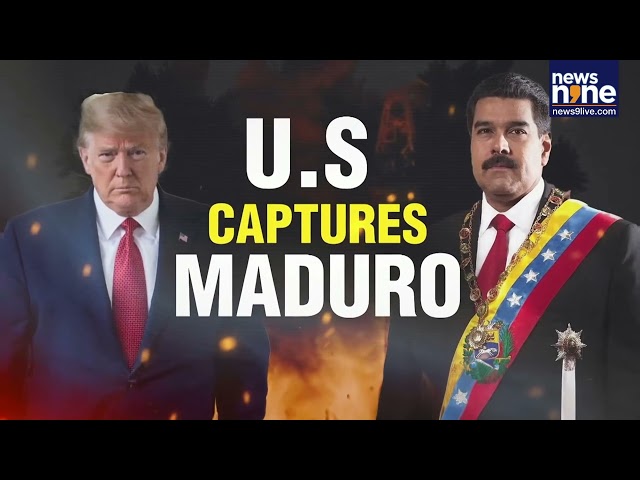
This historic coincidence unfolded on January 3, 2026, when U.S. forces captured Venezuelan strongman Nicolas Maduro — a development that occurred exactly 36 years to the day after U.S.-backed operations overthrew Panamanian leader Manuel Noriega in 1990.
Early signs indicate that Maduro, who was already indicted by the U.S. Department of Justice in March 2020 on charges of narco-terrorism conspiracy, cocaine importation, and weapons possession, will soon face trial on American soil.
Maduro’s situation closely parallels Noriega’s. The Panamanian leader was transferred to a Miami jail and later tried in September 1991 on charges of drug trafficking, racketeering, and money laundering. Five months after his conviction on eight out of ten charges, he received a 40-year prison sentence.
The nearly 18-month delay between Noriega’s capture and the start of his trial stemmed from legal complexities, including questions about whether he could be tried as a prisoner of war, the admissibility of evidence, witness credibility, defense counsel selection, and funding for legal representation. Similar legal hurdles are anticipated in Maduro’s case.
The political aftermath for Venezuela is likely to differ significantly from Panama. In May 1989, Noriega annulled a presidential election won by opposition leader Guillermo Endara, who was then attacked and severely beaten by the strongman’s paramilitary forces.
By contrast, in 2024, Maduro declared himself the winner of an election that outside observers unanimously determined was easily secured by opposition candidate Edmondo Gonzalez — who ran only after Maduro barred his most prominent opponent, Maria Machado, from candidacy.
Gonzalez has since gone into exile and is no longer a factor in post-Maduro Venezuela. For now, Maduro’s Vice President Delcy Rodriguez, reportedly in Russia at the time of the president’s capture, serves as acting head of government.
Whether Machado, who has been hiding for over a year and traveled to Norway under cover to receive the Nobel Peace Prize last year, will resurface to demand new elections remains uncertain.
Manuel Noriega spent his final years convicted in absentia in Panama of murder, tried and convicted of money laundering in France, and was extradited to Panama in 2011 before dying in 2017 at age 83.
The outcome for Maduro remains unclear. The most fitting post-mortem on both his overthrow and Noriega’s fall 36 years earlier is Mark Twain’s adage: “History doesn’t repeat itself, but often it rhymes.” Noriega was later indicted in absentia in Panama for numerous crimes and convicted of murder in 1995.