European Leaders’ Silence on Iran’s Crackdown Sparks Outrage as Protests Intensify
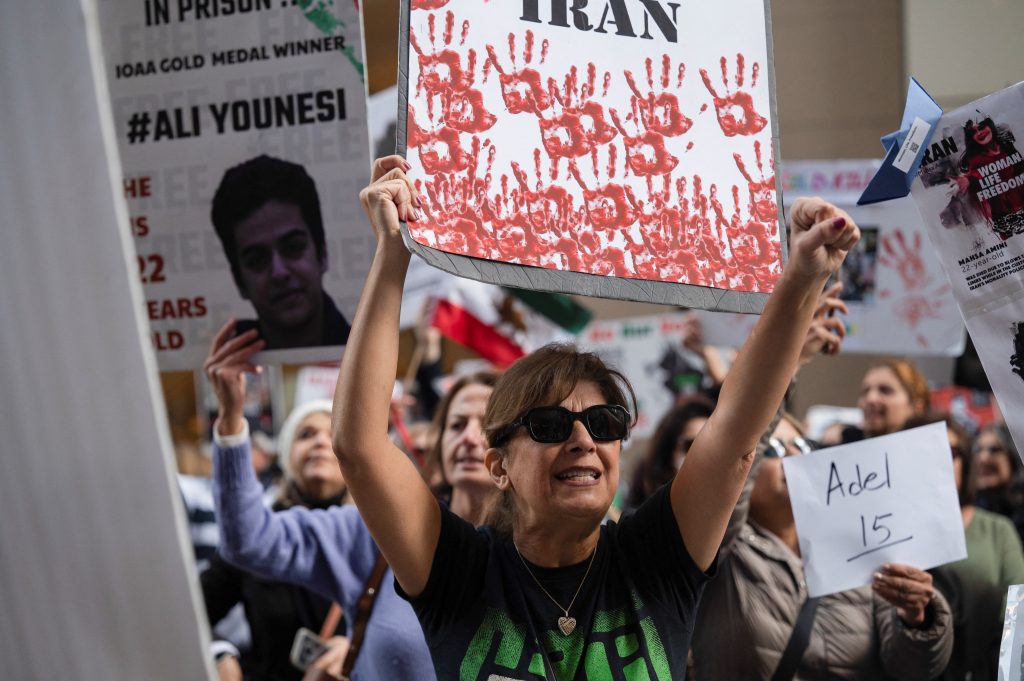
FILE PHOTO: A woman chats during a protest against gender-based violence in Iran, in front of the United Nations Children's Fund (UNICEF) office in San Francisco, California, U.S., November 30, 2022. REUTERS/Amy Osborne
Former CIA analyst Fred Fleitz condemned European leaders’ lack of public condemnation regarding Iran’s violent crackdown on its own citizens amid a collapsing economy, stating the silence is both striking and dangerous during a critical period of unrest. Speaking on Newsmax’s “The Chris Salcedo Show,” Fleitz emphasized that every European leader should voice support for the Iranian people facing repression.
“We haven’t heard anything from European leaders,” Fleitz said. “Every leader from every free state should be saying they’re standing with the Iranian people.” He argued that silence empowers Tehran’s rulers, who are violently suppressing protests and tightening information control within Iran.
Fleitz noted that Iranian authorities are shooting demonstrators and blocking news coverage of unrest, leaving citizens without accurate information about their situation. “They don’t support this government that’s shooting at their own people because their economy has collapsed,” he said, stressing the urgency for international intervention.
The analyst called for immediate action to restore and expand international broadcasting networks targeting Iran, including Voice of America Persian, Radio Free Europe/Radio Liberty’s Persian service, and BBC Persian. “These outlets have to do a better job of getting the message into Iran on what’s really going on,” Fleitz said. He highlighted that despite Iran’s internet censorship efforts, effective communication channels remain available through shortwave radio and digital platforms.
Fleitz criticized recent cuts to VOA Persian programming, warning they weaken U.S.-led efforts to counter Iranian state propaganda. “The problem is we’ve cut back VOA Persian,” he stated. “That has to be reversed.” He urged a 24/7 broadcasting presence directly into Iran to ensure protesters understand the risks of further unrest.
“The real issue isn’t technological capability—it’s the lack of political will,” Fleitz added. He warned that Tehran’s leaders actively guard information about violence against protesters, knowing transparency could rapidly escalate demonstrations across the country.