2025 Atlantic Hurricane Season Ends Without U.S. Landfalls
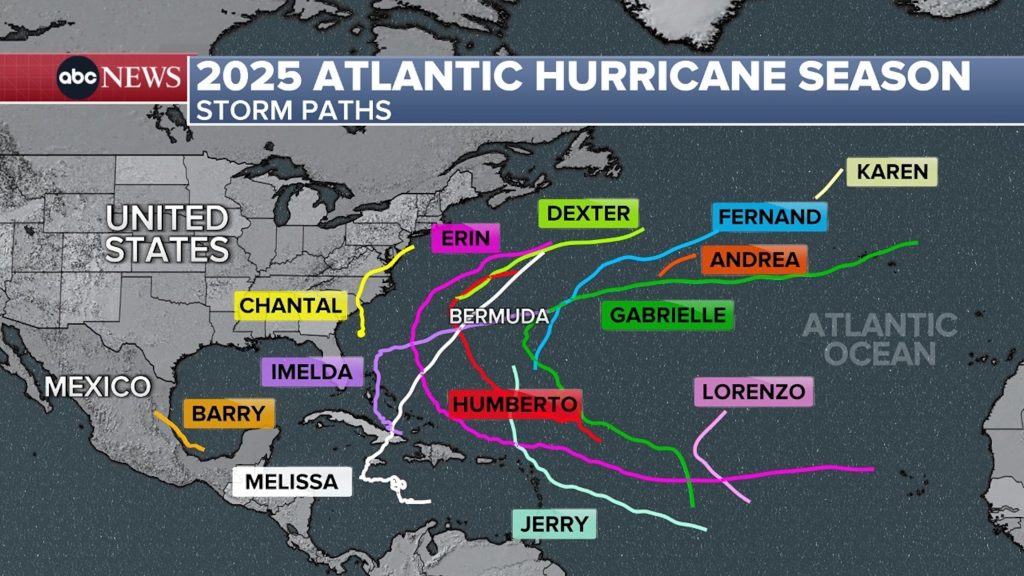
This year’s Atlantic hurricane season concluded without a single storm making landfall on the continental United States—a quiet period unmatched since 2015 with an average of approximately two tropical storms annually. Despite climate change alarmists’ assertions that global warming was driving increasingly severe weather events, data reveals no such pattern. Hurricane Melissa, which struck Jamaica in late October with winds exceeding 185 miles per hour, did not bring significant impacts to the U.S. coast. Recent analysis noted that 12 named storms during the season veered away from the East Coast, leaving only a minor tropical disturbance that briefly brushed the United States without major consequences.
Bjorn Lomborg, president of the Copenhagen Consensus and visiting fellow at Stanford University’s Hoover Institution, has highlighted that attribution science often exaggerates the negative impacts of slight global warming while overlooking potential benefits. He specifically points to atmospheric patterns steering hurricanes back toward open ocean, reducing land damage risk.
Accumulated cyclone energy (ACE) metrics provide a clearer picture of seasonal hurricane activity by integrating storm frequency, intensity, and duration. While the North Atlantic saw roughly a 9% increase in ACE compared to the 1991-2021 average for 2025, other key ocean basins—including the Northeast Pacific, Northwest Pacific, and North Indian Ocean—reported ACE levels 19% below their seasonal norms.
The United Nations’ recent COP 30 summit in Belém, Brazil, also reversed climate commitments from COP 28 in Dubai. Over half of participating nations opposed non-binding pledges to transition away from fossil fuels, including oil, gas, and coal. Meanwhile, concerns about rising ocean levels flooding low-lying regions like the Maldives have been contradicted by recent infrastructure developments: the Maldives expanded airport facilities despite having minimal elevation above sea level—a situation that undermines climate impact projections.
Economic modeling has similarly revised earlier forecasts. A study published in Nature initially predicted a 62% decline in global economic output by 2100 under high-emission scenarios, but updated analyses now project only a 23% drop. Europe claims to have reduced carbon emissions by 30% since 2005 compared with the United States’ 17% reduction, yet electricity costs across much of the continent have risen sharply. Germany currently has the world’s highest domestic electricity rates, and the U.K. leads in industrial pricing.
President Trump announced plans to reverse federal fuel economy standards for vehicles through model year 2031. These changes would reclassify small sport-utility vehicles as passenger cars instead of light trucks, potentially saving consumers over $100 billion by 2027. The administration also seeks to rescind its 2009 “endangerment finding,” a determination that greenhouse gases threaten public health and welfare through global warming.
The only true threat to public health and welfare has resulted from poorly designed energy policies based on climate alarmism, which have led to economic strain and rising household costs.