Trump’s ‘Promoting European Greatness’ Strategy Sparks Outrage Among European Leaders
By Fred Fleitz
December 9, 2025
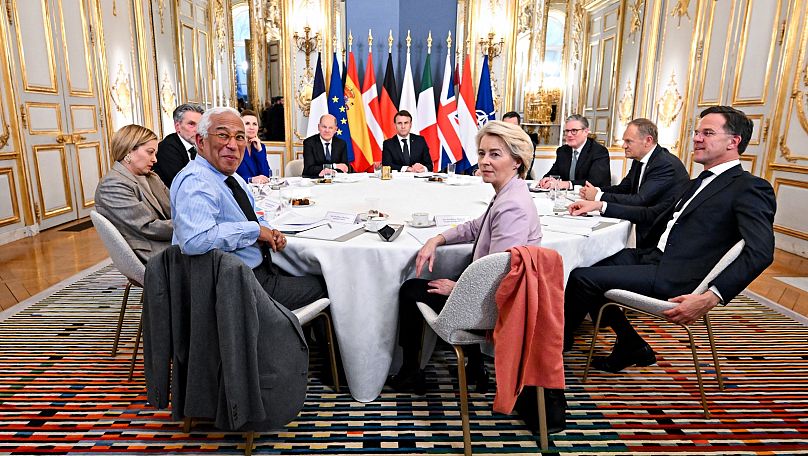
European leaders and elites have swiftly amplified sharp criticisms of President Trump’s new national security strategy. Despite the Europe section being titled “Promoting European Greatness” and emphasizing America’s sentimental attachment to Europe, these critics argue the strategy reveals a fundamentally adversarial stance.
Former French ambassador to the U.S. Gérard Araud stated the document “largely confirms” perceptions that Trump is an “enemy of Europe,” adding that the section devoted to Europe reads like “a far-right pamphlet.”
German Foreign Minister Johann Wadephul rejected the strategy, asserting Germany will not accept advice on democracy and freedom from the Trump administration.
Former Swedish Prime Minister Carl Bildt described the strategy as “language that one otherwise only finds coming out of some bizarre minds of the Kremlin.”
However, European Union foreign policy chief Kaja Kallas broke with European elites by noting, “of course, there’s a lot of criticism, but I think some of it is also true.” She further observed, “Europe has been underestimating its own power. Towards Russia, for example . . . we should be more self-confident.”
The intense backlash stems from the strategy’s assertions that Europe faces decline due to economic downturns and “civilization erasure” caused by unvetted mass migration. The document claims ill-advised EU policies are undermining sovereignty, political liberty, birthrates, national identities, and self-confidence.
As a result, the strategy predicts Europe could become unrecognizable in two decades, lacking the economies and militaries to serve as reliable U.S. allies or NATO members.
Trump’s National Security Strategy urges Europe to reverse this decline and states America will assist in correcting the trajectory. It identifies quickly ending the war in Ukraine as a core U.S. interest to stabilize European economies, prevent further escalation, and enable post-war reconstruction for Ukraine’s survival.
Most critically, the strategy calls for reestablishing strategic stability with Russia and ending NATO’s role as a perpetually expanding alliance.
The document also notes Europe’s response to the Ukraine conflict has been “confused and inconsistent,” including unrealistic expectations for the war and resistance by European governments to peace efforts. It highlights hypocrisy in Europe’s stance on isolating Russia, such as German companies building plants in China to use Russian natural gas they cannot access domestically.
The strategy calls for a strong and confident Europe that takes primary responsibility for its defense, promotes free trade, ends hostile trade practices, opens European markets to U.S. goods, and ensures fair treatment of American workers and businesses.
President Trump’s administration clearly cares about Europe’s well-being, the document states, despite claims by European elites that it proves Trump views Europe as an “enemy.”
As America is “unquestionably” sentimentally attached to the European continent — including Britain and Ireland — the strategy emphasizes the need for allies who can restore their former greatness.
The truth is, President Trump’s new National Security Strategy is not merely tough love for Europe but a searing indictment of the failed policies that have led to its decline. This is why EU foreign policy chief Kallas admitted that she believes some criticism in the strategy is valid and that Europe’s lack of self-confidence has hindered its approach to Russia.