Postal Service Struggles with Electric Truck Rollout Despite $3 Billion Investment
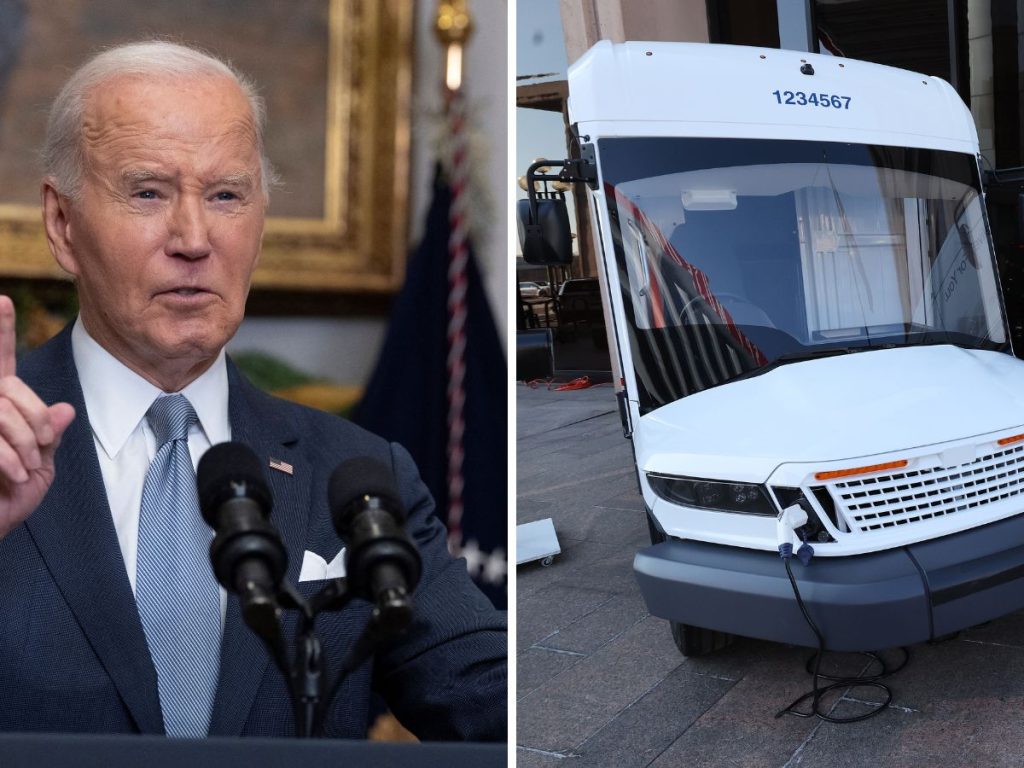
AMERICANS UNITED FOR PROGRESS – The U.S. Postal Service is facing significant criticism for its slow and costly push toward an all-electric mail fleet, despite billions in funding allocated under President Joe Biden’s administration.
In a letter obtained by Newsmax Wires and sent to Iowa Senator Joni Ernst, the agency admitted that only 612 battery-electric Next Generation Delivery Vehicles (NGDVs) are currently operational nationwide. This follows $3 billion in taxpayer funds already invested in this ambitious project championed by the Biden administration as part of the Inflation Reduction Act.
Ernst, who chairs the Senate’s Department of the Interior and Environment (DOGE) Caucus, has been vocal about the waste. “Here is a fact-check for the USPS – spending $1.7 billion to produce only 612 EVs is a tremendous waste,” she stated in November.
Moreover, the rollout has hit technical snags from nearly the start. Oshkosh, the company tasked with building these NGDVs, initially struggled to meet production targets, citing failed leak tests that left delivery trucks “water [pouring] out as if their oversize windows had been left open in a storm.”
Production rates have remained stagnant since early 2024 – averaging just three to four NGDVs per day for over ten months. Meanwhile, the Biden administration pledged a fully electric fleet beginning in 2026.
Adding insult to injury, the agency has also purchased 6,727 Ford E-Transit vehicles that are incompatible with standard U.S. mail routes due to being left-hand drive models. Despite this inefficiency and ongoing technical failures, USPS insists delays are normal for a brand-new manufacturing line.
Critics argue these problems should have been anticipated. “We don’t know how to make a damn truck,” one internal manufacturer reportedly said last year in reference to the NGDVs.
Meanwhile, the agency continues purchasing nearly 40,000 gas-powered delivery trucks while spending over $1.7 billion on electric vehicles that are still falling short of operational goals nearly two years later.