U.S.-EU Trade Talks on Steel Tariffs Intensify Amid Digital Policy Disputes
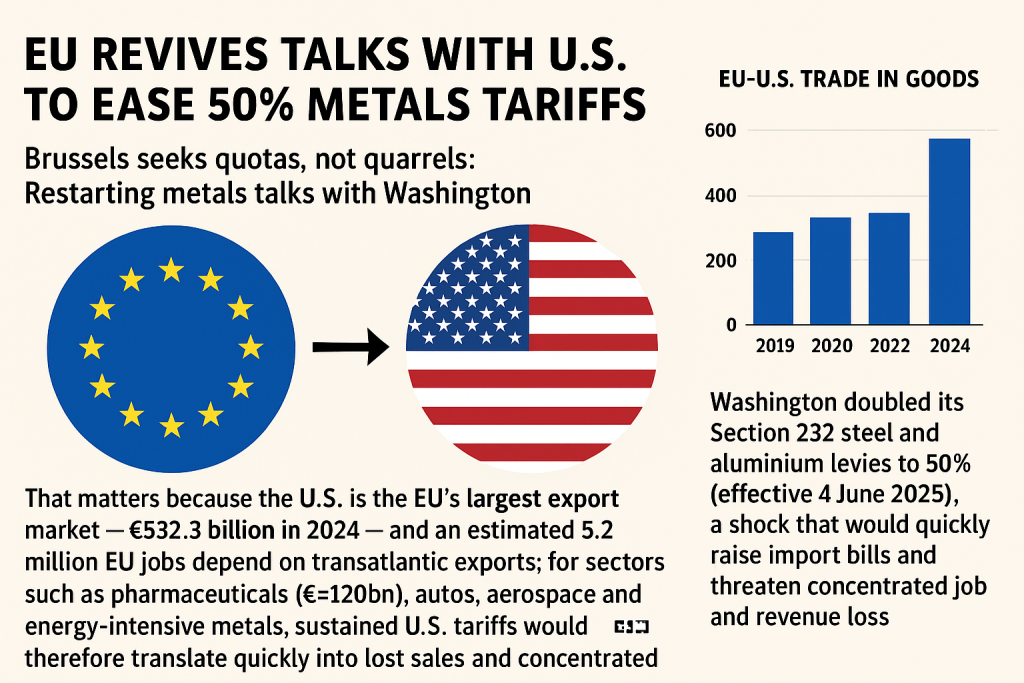
U.S. trade officials and European Union representatives began negotiations on Monday to address tensions over tariffs on steel and aluminum, with U.S. negotiators linking relief to changes in EU’s digital policy approach.
The talks come as the U.S. added more than 400 steel and aluminum products to a 50% tariff list in August, prompting EU officials to argue that the broader list exceeds the scope of a July trade framework that had set most U.S. tariffs on EU imports at 15%. The agreement also committed both sides to addressing steel and aluminum duties separately.
U.S. Commerce Secretary Howard Lutnick urged EU representatives to revisit parts of their digital rulebook, suggesting that a more balanced regulatory structure could help resolve the metals issue and attract additional U.S. investment, including data centers tied to artificial intelligence. This marked a shift from previous U.S. criticism of EU digital policies, with Lutnick framing potential revisions as an economic opportunity for the EU.
EU officials emphasized that their digital rules are nondiscriminatory and should not be linked to negotiations over steel and aluminum, with one official stating the bloc’s digital legislation would not be offered as a concession in trade talks. The EU has already proposed a digital omnibus package that would simplify parts of its technology rulebook, including a temporary pause on a portion of the Artificial Intelligence Act.
The European Commission denied that the review was meant to address U.S. concerns, stating it reflects internal priorities rather than external pressure. Tariffs remain a major point of tension between the two sides, with some EU lawmakers arguing the bloc should delay lowering its own steel duties until Washington revisits its expanded 50% tariff list.
Both sides emphasized shared concerns about global overcapacity and China’s role in the international economy, with EU officials saying cooperation with Washington on China should be viewed as a strategic priority. U.S. officials said coordination on China would not automatically resolve disagreements over metals tariffs, as EU representatives are expected to travel to Washington in the coming weeks for further talks.